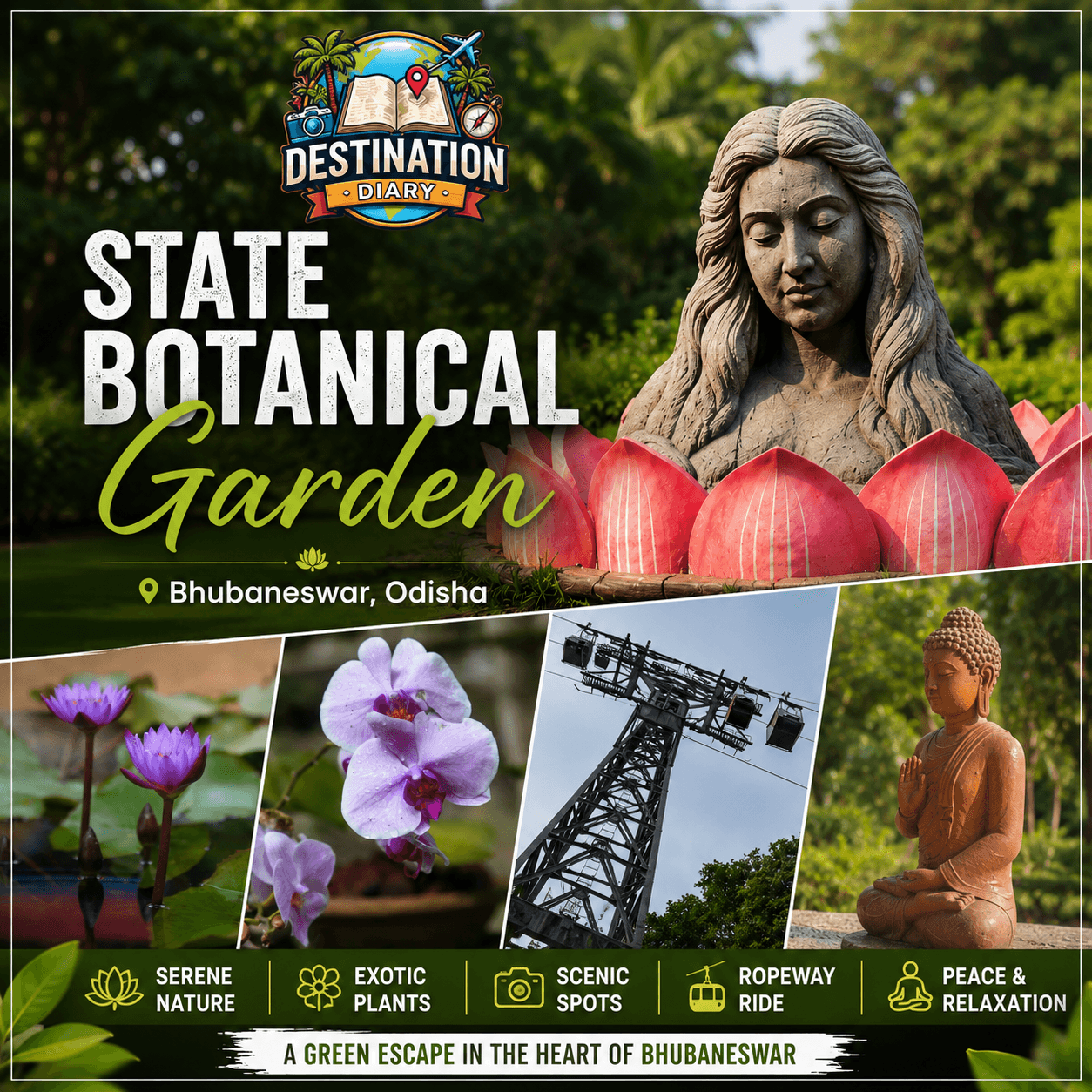
State Botanical Garden — 24 gardens between two quiet lakes
Rasmita said it before we'd even parked the car — this felt less like a garden visit and more like walking into a poem. We didn't fully understand what she meant until we'd spent a few hours getting lost between roses, lily ponds, and a sculpture of a woman's face rising out of a lotus flower.
The State Botanical Garden sits inside the Nandankanan Sanctuary, tucked between two calm wetlands — Kanjia and Kiakani — across roughly 75 hectares, about 25 of which are the Kiakani lake itself. It was first laid out in 1963 under the Horticulture Department, and only came under Nandankanan's own management in August 2006 — which explains why it feels like one continuous landscape rather than a single garden: it was grown, section by section, over more than four decades, on the gently undulating land about 20 kilometres from Bhubaneswar.
The road in runs right along Kanjia Lake, shaded by trees, with just enough breeze off the water to make you slow down before you've even reached the gate. We stopped at the garden map near the entrance and realised, looking at how many sections were laid out across it — 24 of them, each with its own theme — that we were not going to see all of this in a rush.
Where the story of plants begins
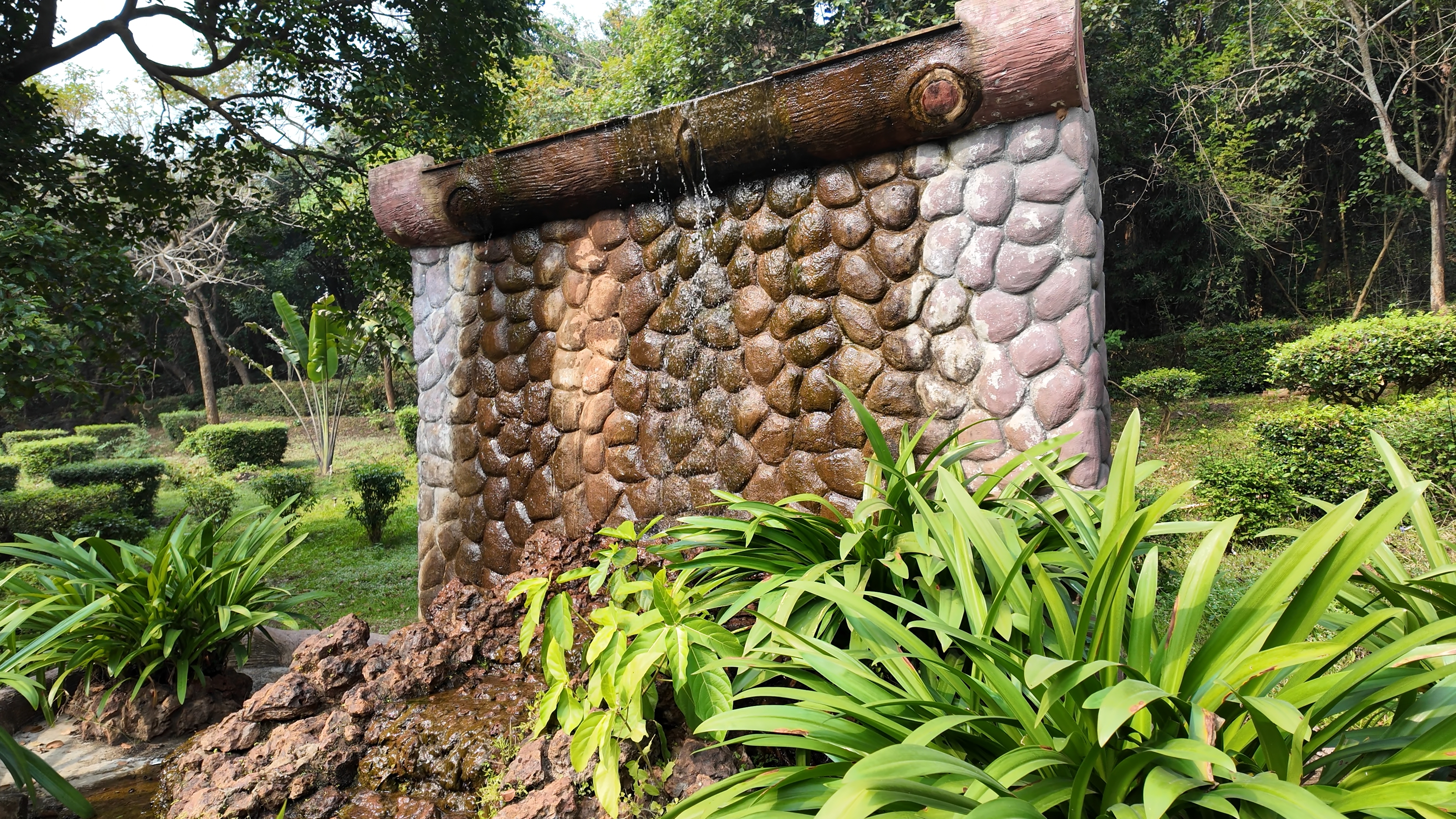
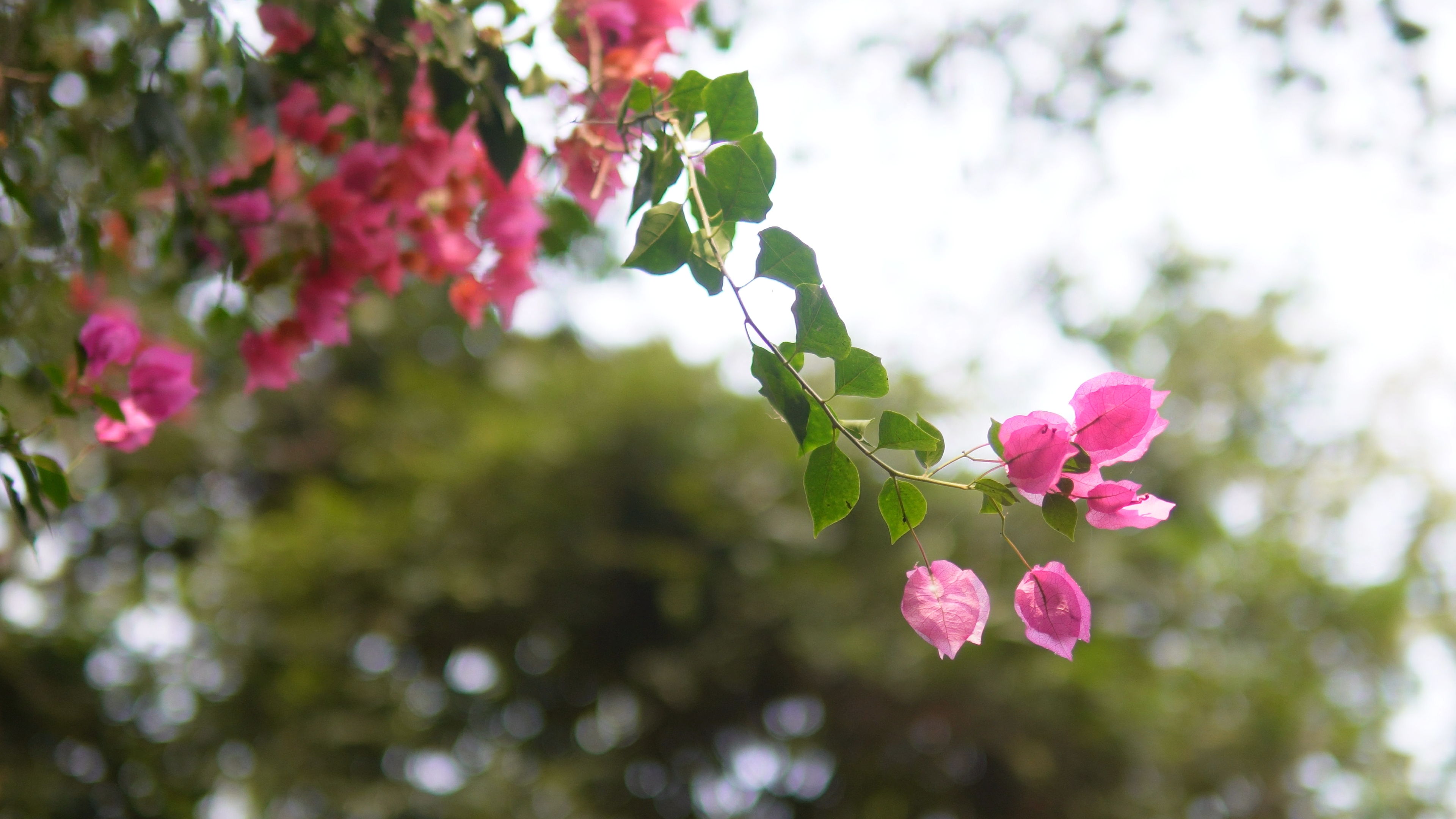
First stop was the Evolution Garden — a small patch, less than a hectare, set up almost like an open-air classroom. It walks you through how plant life evolved, starting from algae (saibala, as it's called locally) all the way to flowering monocots and dicots, in simple, easy-to-follow steps. Bright bougainvillea flowers added color along the path, and the spot everyone seemed to stop at was a small waterfall-style fountain with a little bridge running over it — easily the most photographed corner of this section.
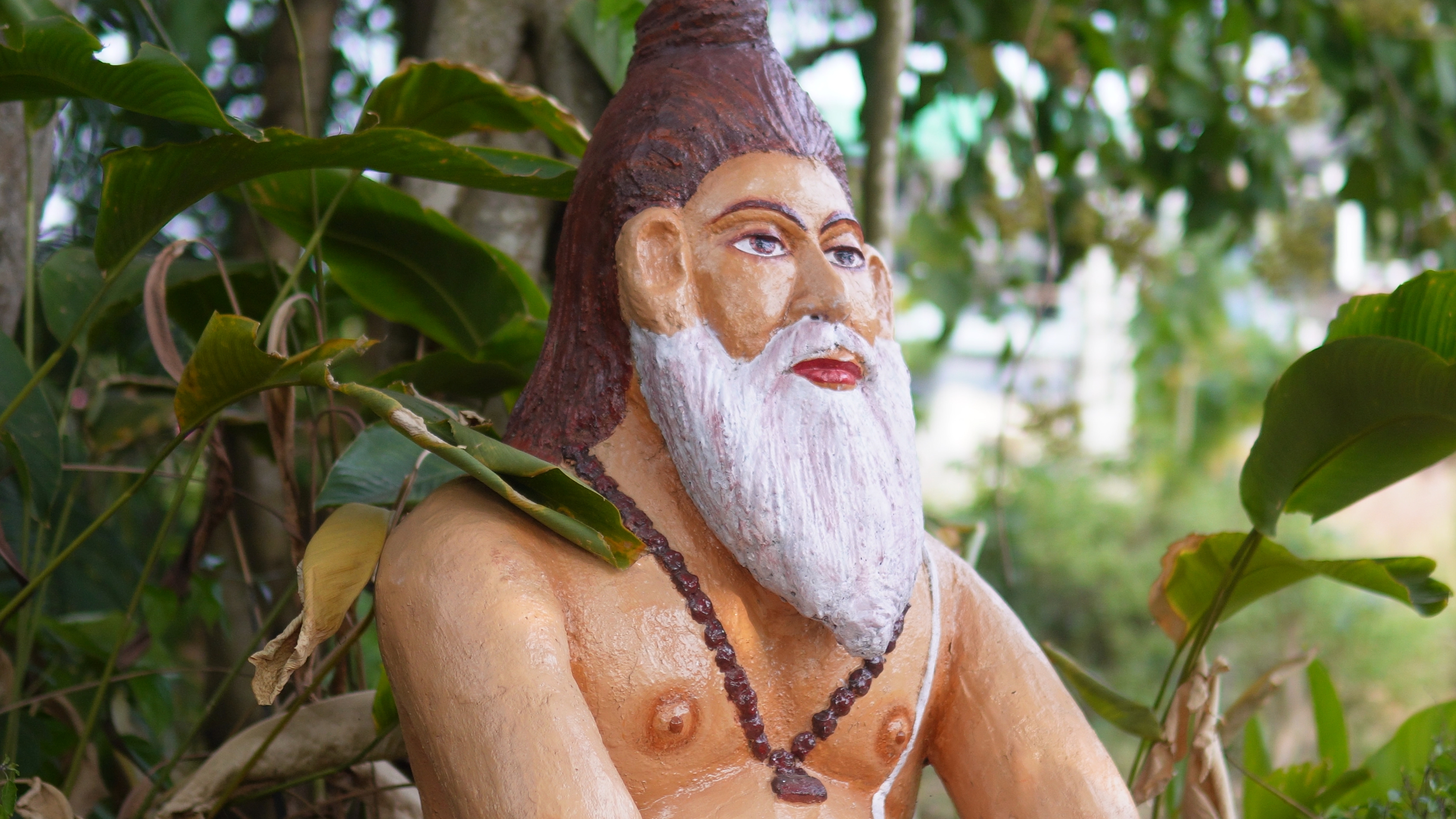
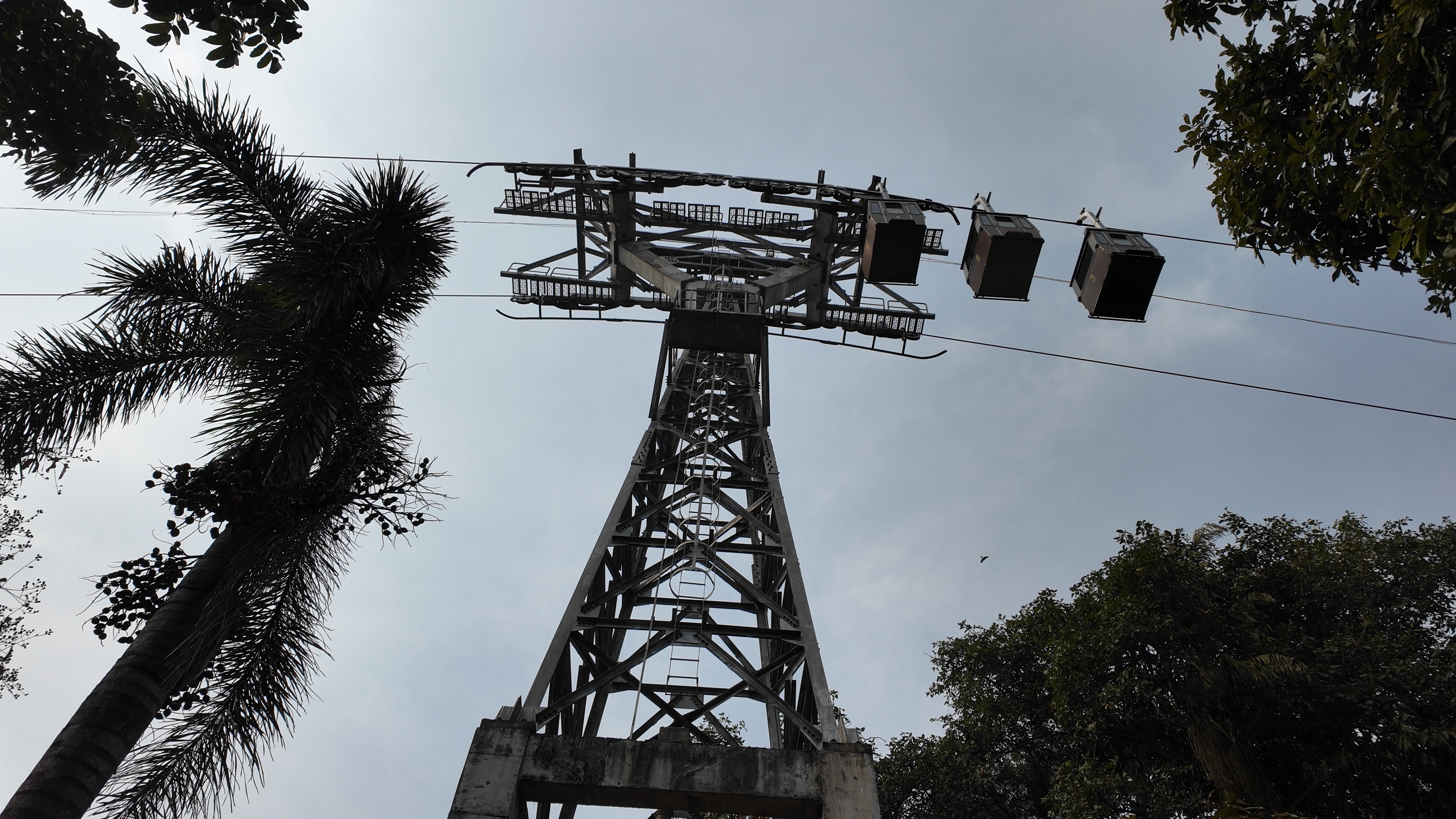
Right next to it is the Heritage Garden, built around the idea of how our ancestors lived — a sage's statue, little clay-cottage-style sculptures standing in for a rural homestead. What made it memorable, though, was looking up: a ropeway pole stands right in the middle of this garden, with cable cars gliding overhead every few minutes. Tradition sitting quietly below, modernity sliding past above it. We hadn't expected that combination, and it stuck with us.
Cool glass and happy noise
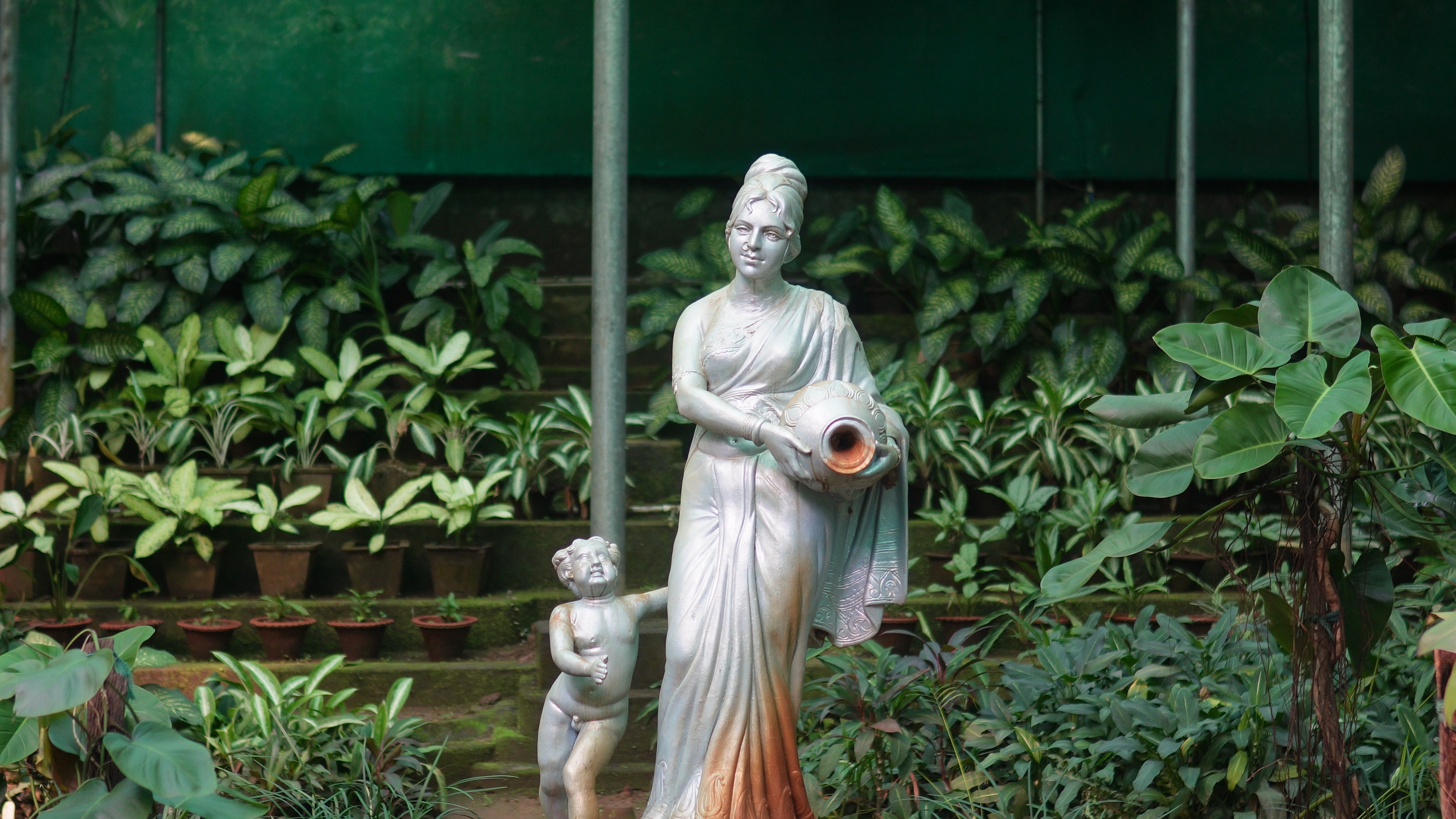
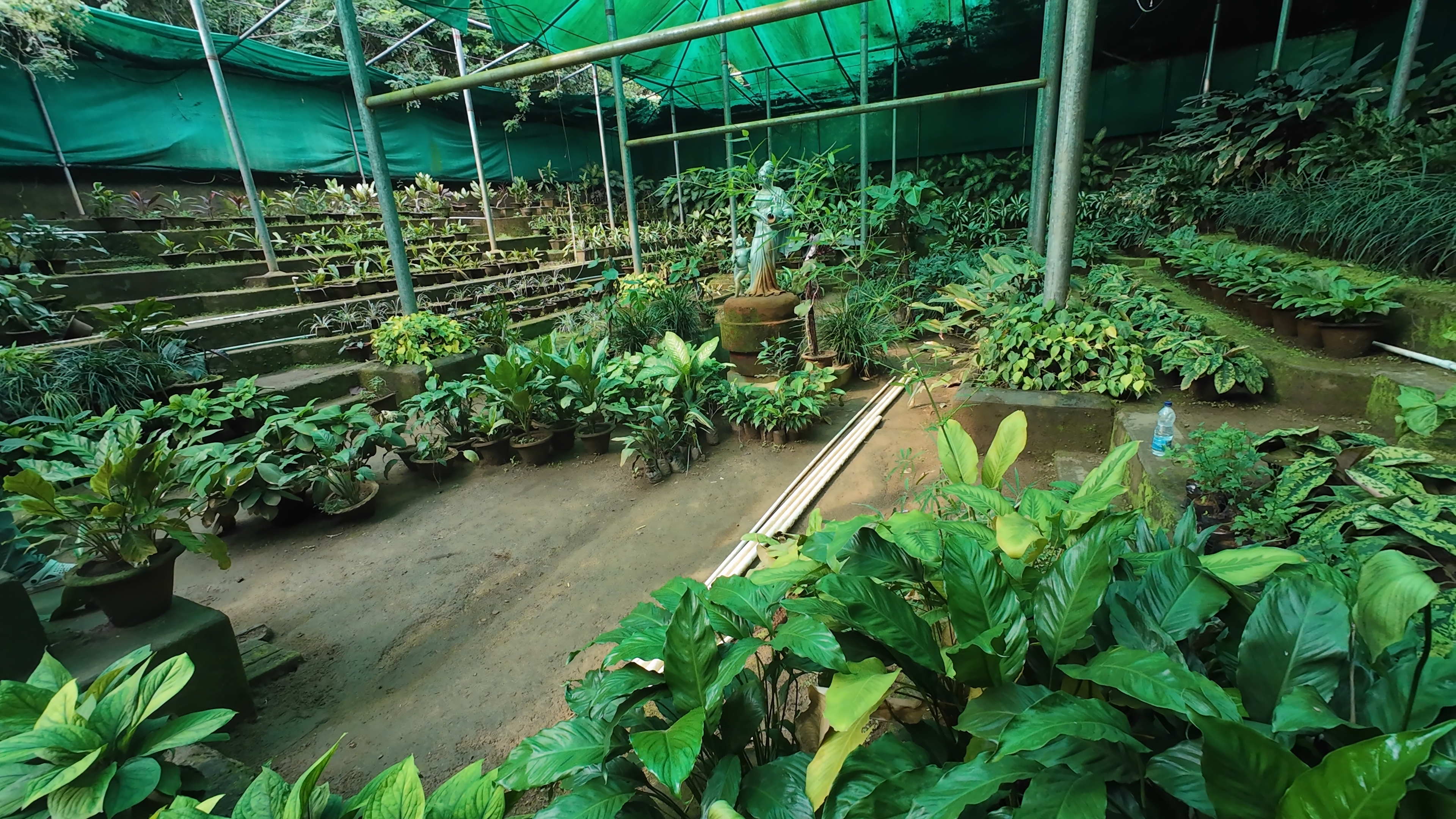
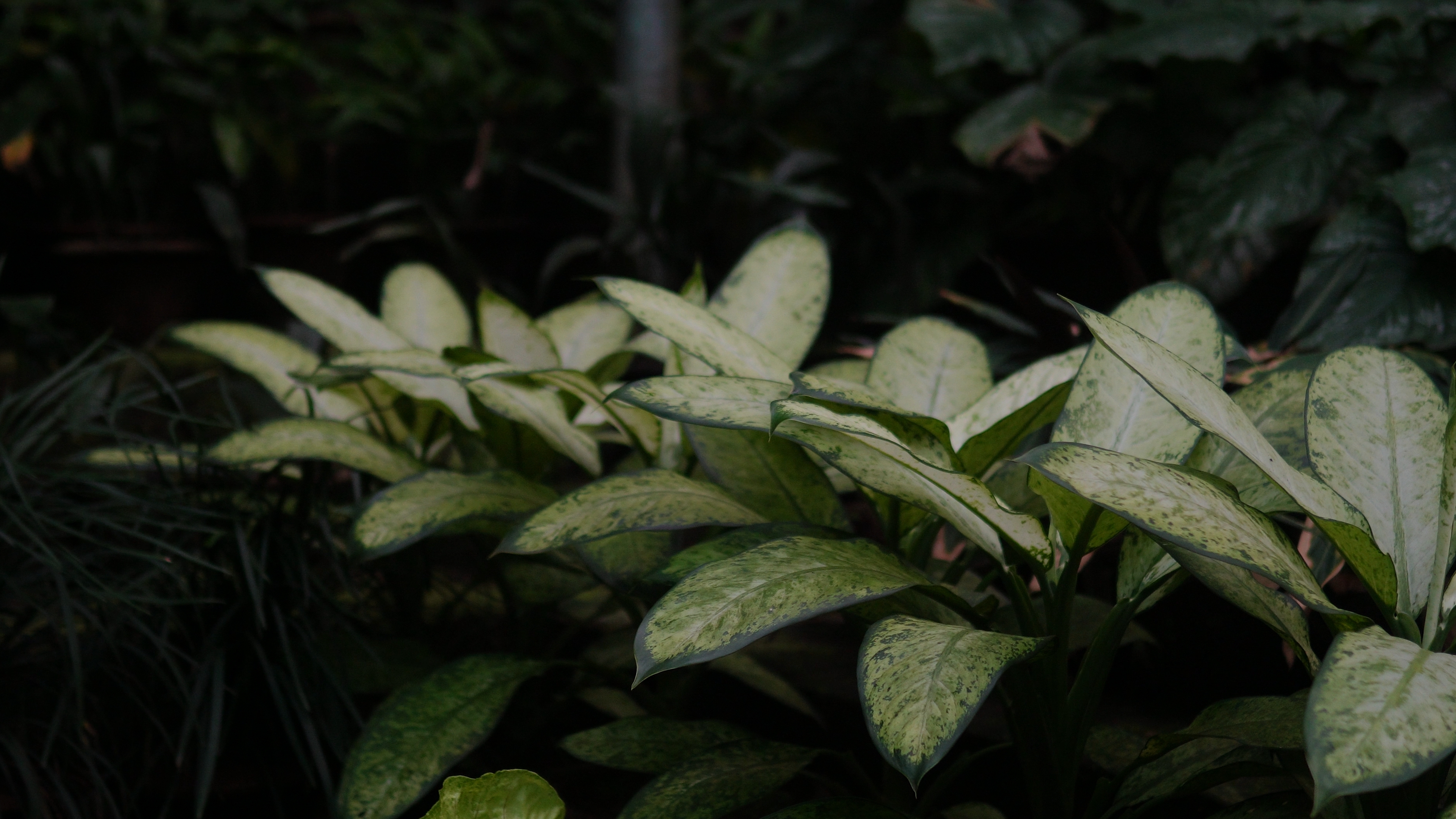
Near the watch tower stands a statue, and just to its right is the Green House — about 5,200 square feet, holding around 60 species of indoor plants: Aglaonema, Philodendron, Monstera, Hemigraphis, and more. Stepping inside, the temperature actually drops a little — it's noticeably cooler and greener than anywhere else in the garden so far.
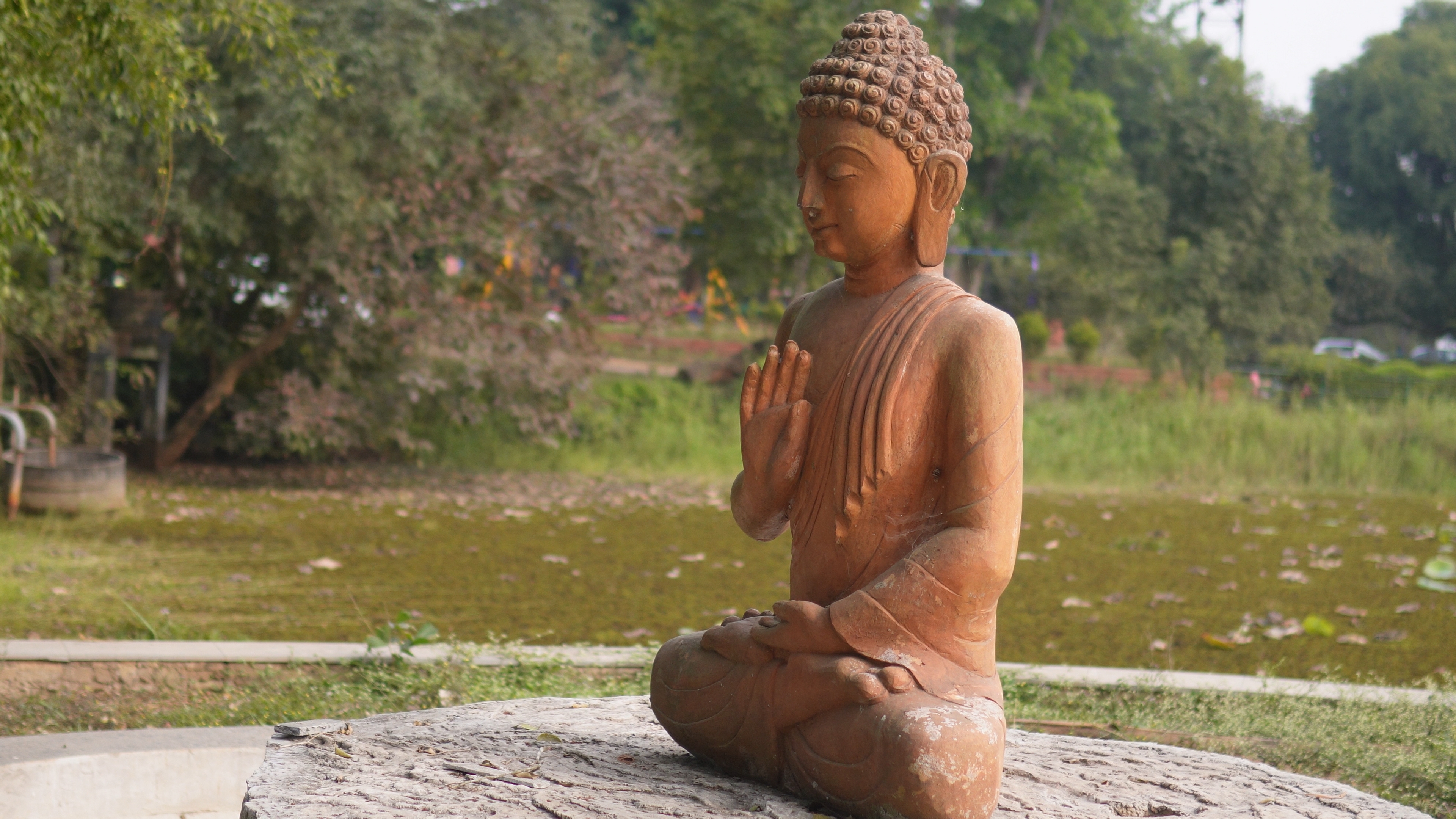
Just past it is the Children's Park — easily the most crowded spot in the entire garden. Swings, see-saws, slides, and the kind of joyful noise that only a playground full of kids can produce. Right beside it is the Buddha Garden, still under construction when we visited, though the Buddha statue itself is already worth the short detour. A small flower-shed nearby gives that corner a quieter, more peaceful feel, even with the construction going on.
An Artificial Zoo close by was closed when we got there, so we can't tell you much about it firsthand — if you've been and seen it open, we'd genuinely like to know what it's like.

The garden we loved most
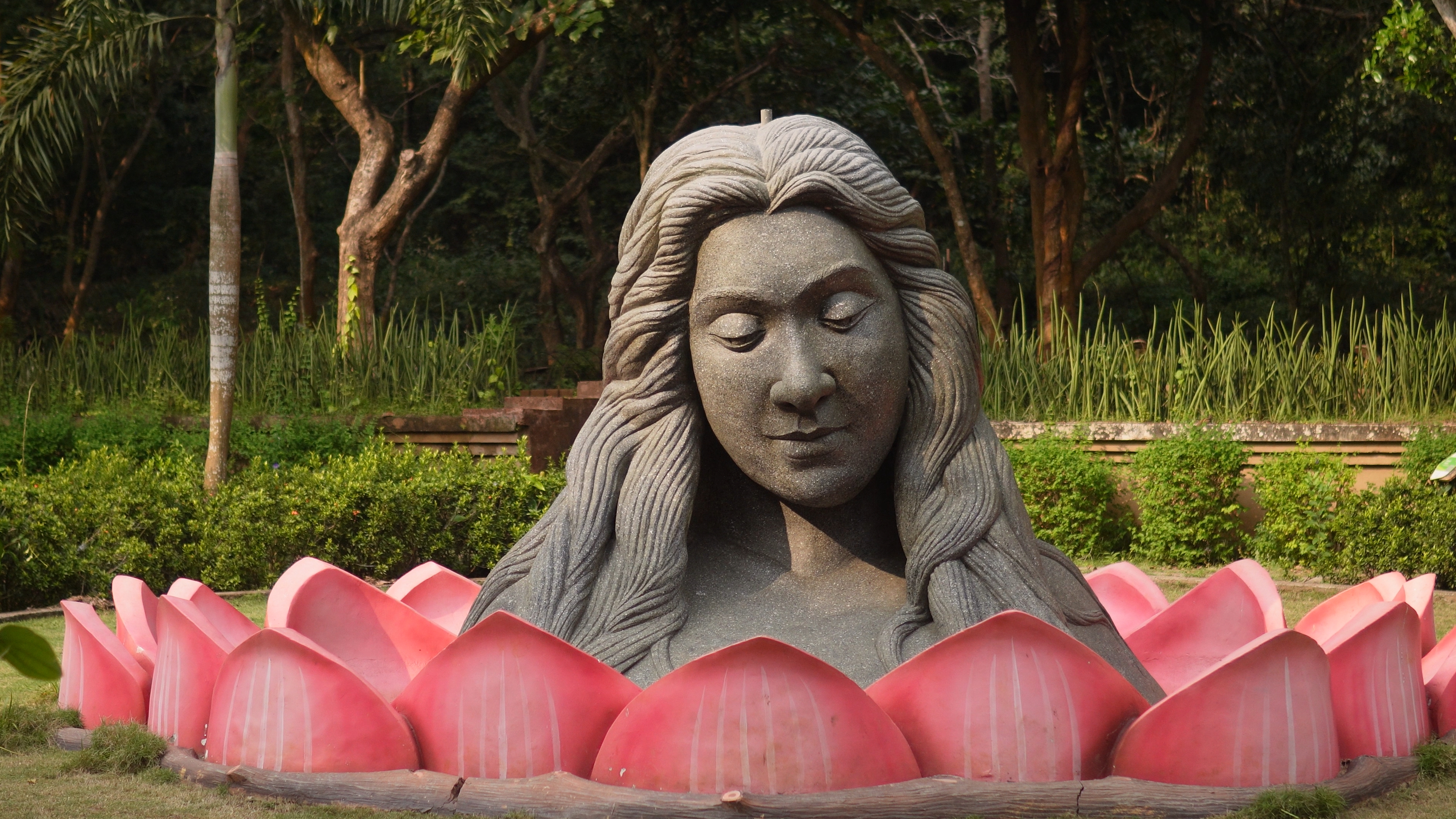
If we had to pick a favourite section, it's the Medicinal Garden, without much debate. It's bigger than the others, more deliberately designed, and it has a centerpiece that stops almost every visitor in their tracks — a large sculpture of a woman's face emerging from a lotus flower. We watched a steady stream of people queue up just to get a photo with it, and we joined that queue too.
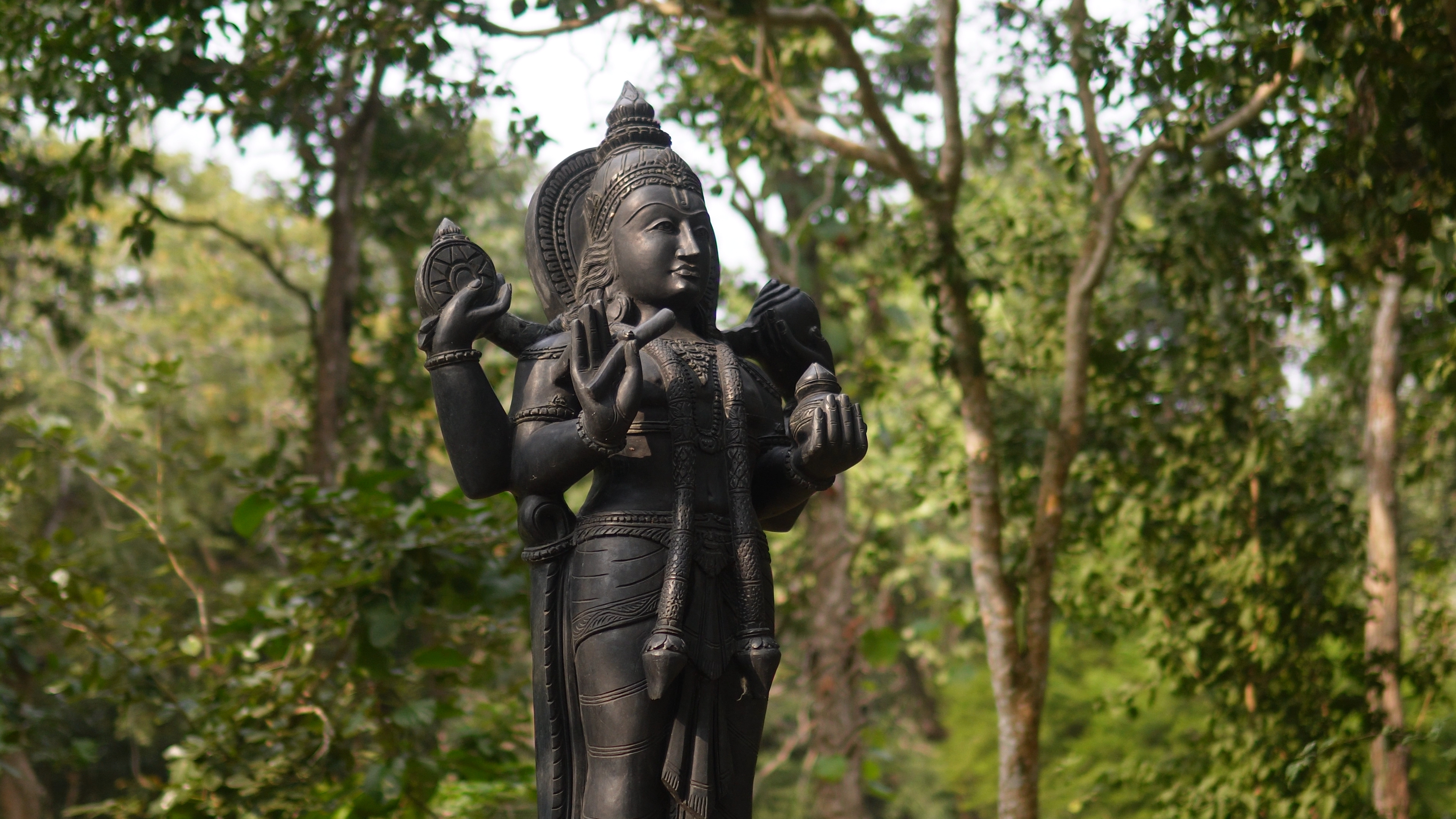
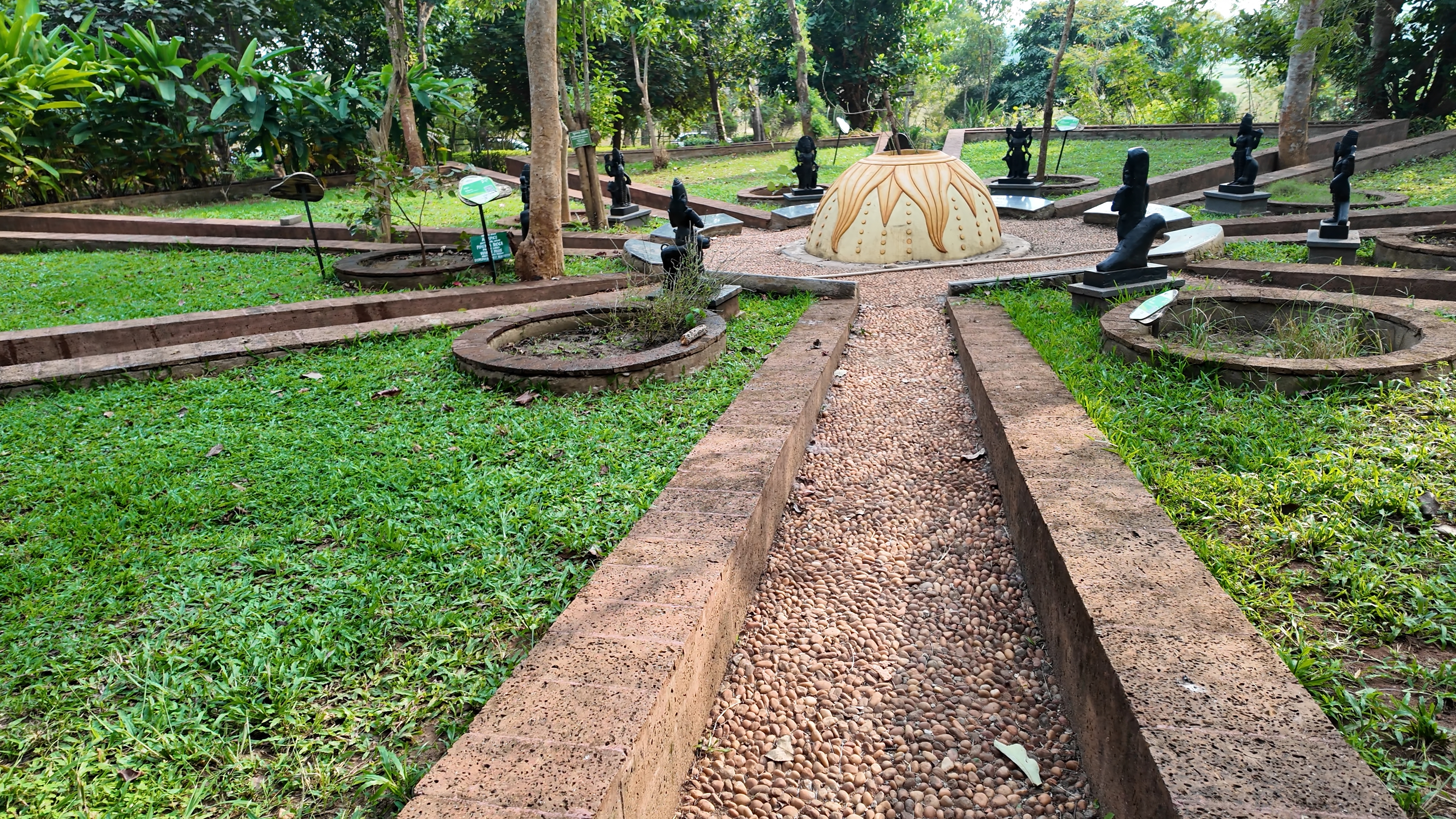
Close by stands a statue of Lord Vishnu, and within the same garden is the Nabagraha Vatika — laid out like a miniature solar system, with Surya Deva (the Sun) at the centre and the other "planets" arranged around it, each represented by its own statue. It's a quiet nod to a very Odisha way of seeing the cosmos — the navagrahas as deities, not just celestial bodies. Scattered through the rest of the garden are medicinal plants, each one labeled with its name and use, which made the whole walk feel as informative as it was peaceful.
A small world tour, all in one afternoon
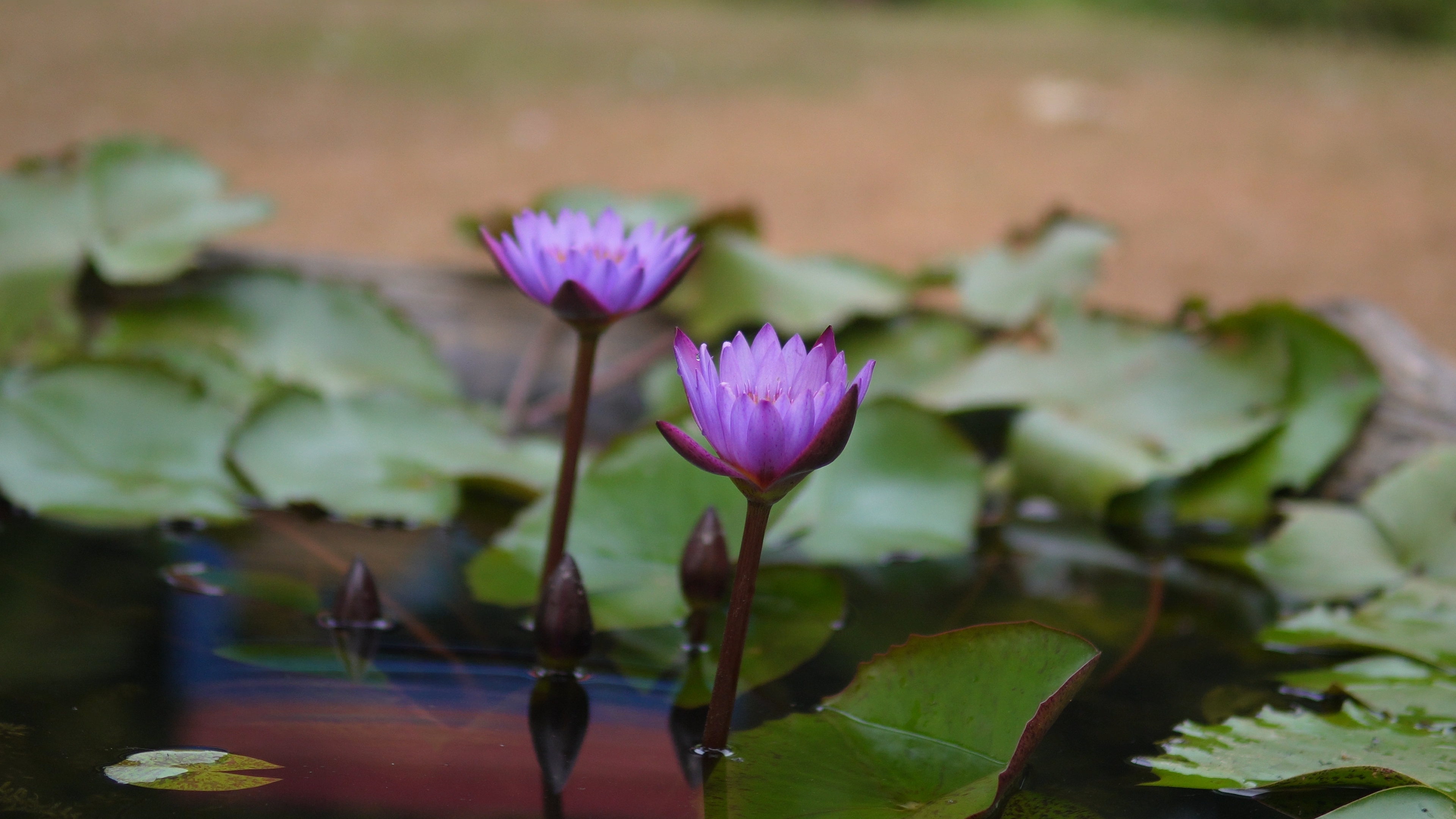
From there the garden takes you through a quick succession of themed sections. The Japanese Garden, honestly, doesn't feel very Japanese — it reads more like a regular Indian garden, with a small pond dotted with lily flowers and a little Japanese-style cottage tucked at one end. The Orchid House next door was newly planted at the time, so only one or two plants were actually in bloom — worth a quick look rather than a long stop, at least for now.
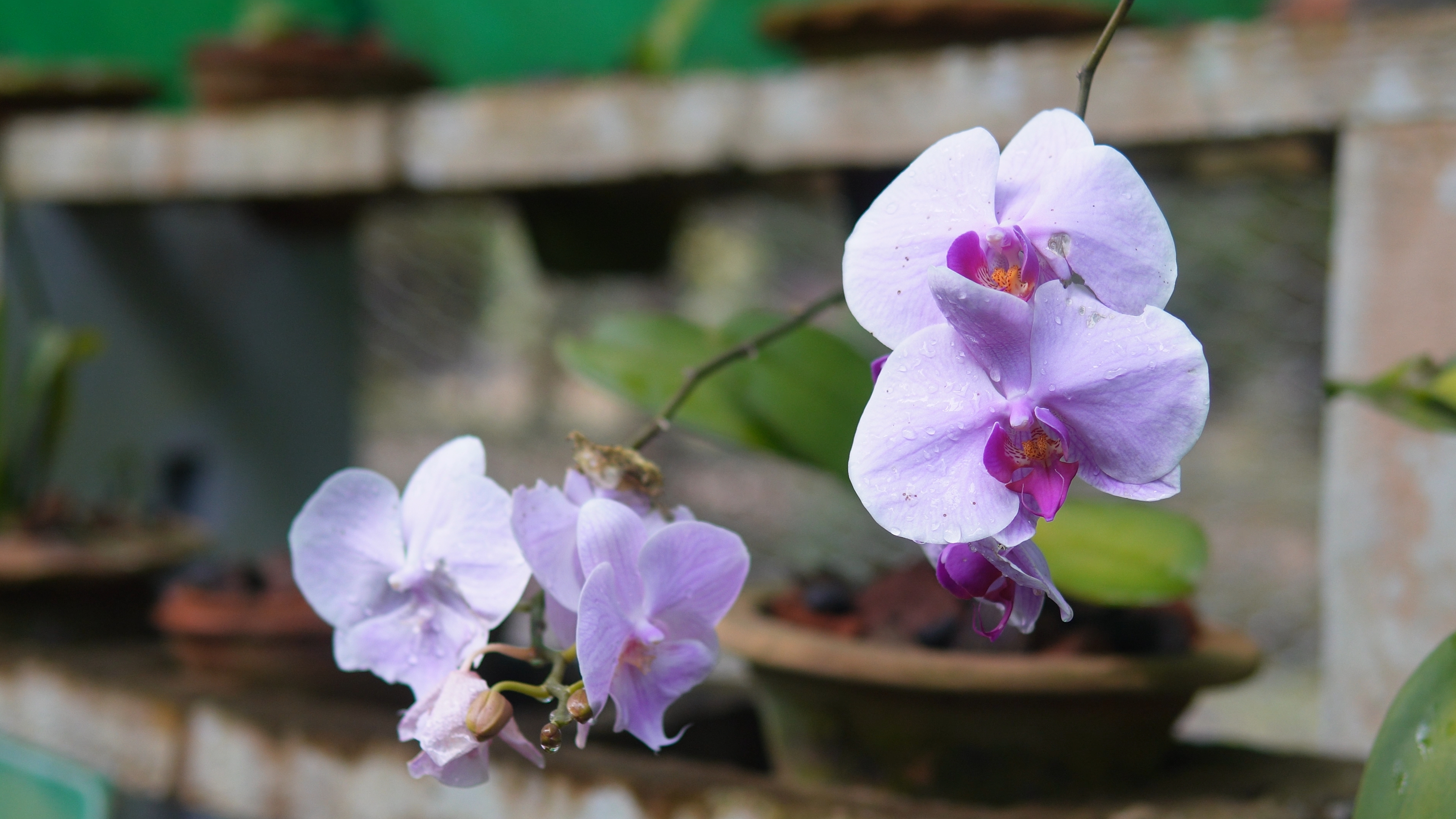
Right behind the Orchid House is the Bonsai Garden, and the quietest moment of our whole visit happened here — watching an elderly woman carefully, patiently potting bonsai saplings, completely absorbed in the work. No one was rushing her, and we didn't either.
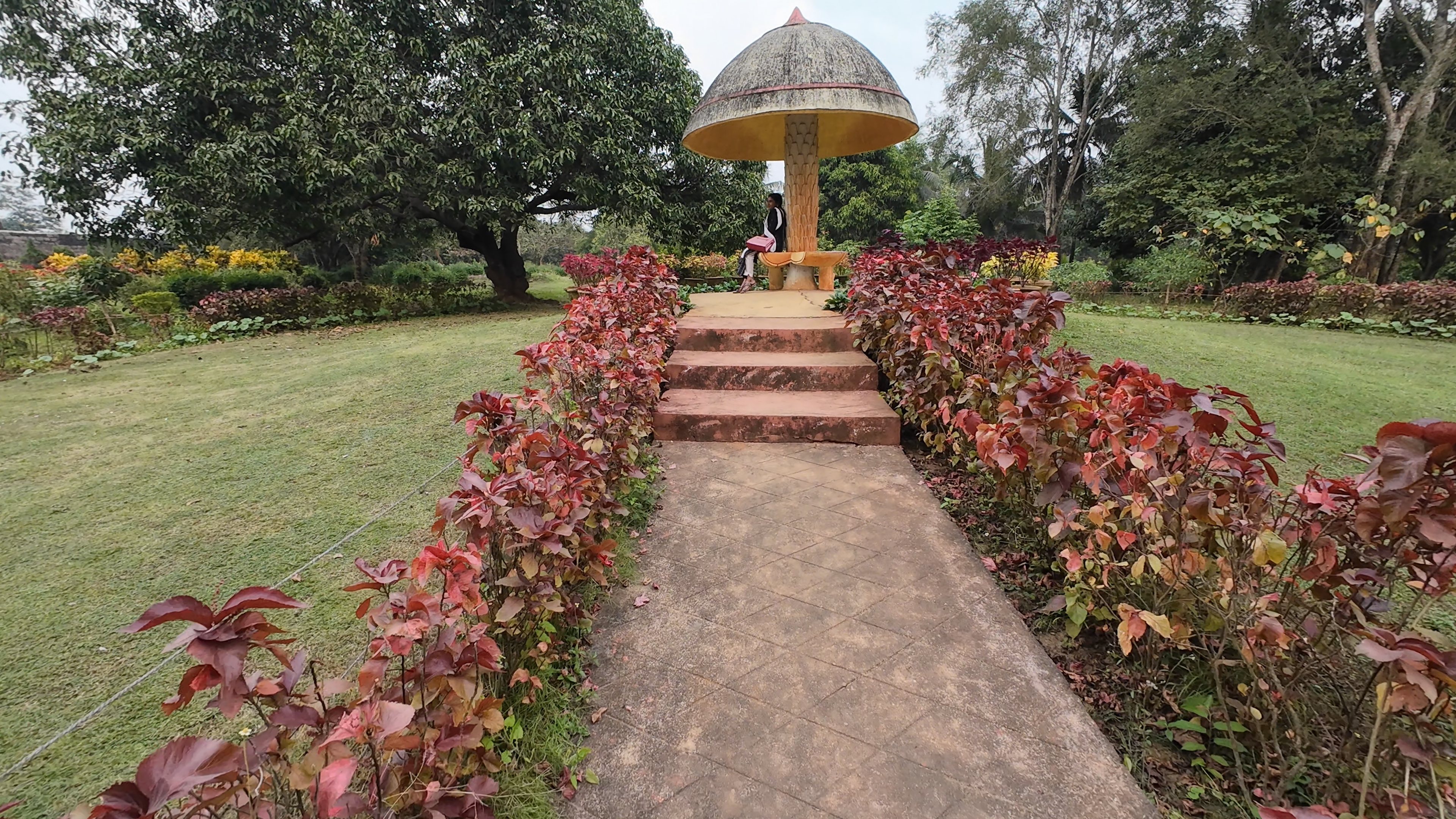
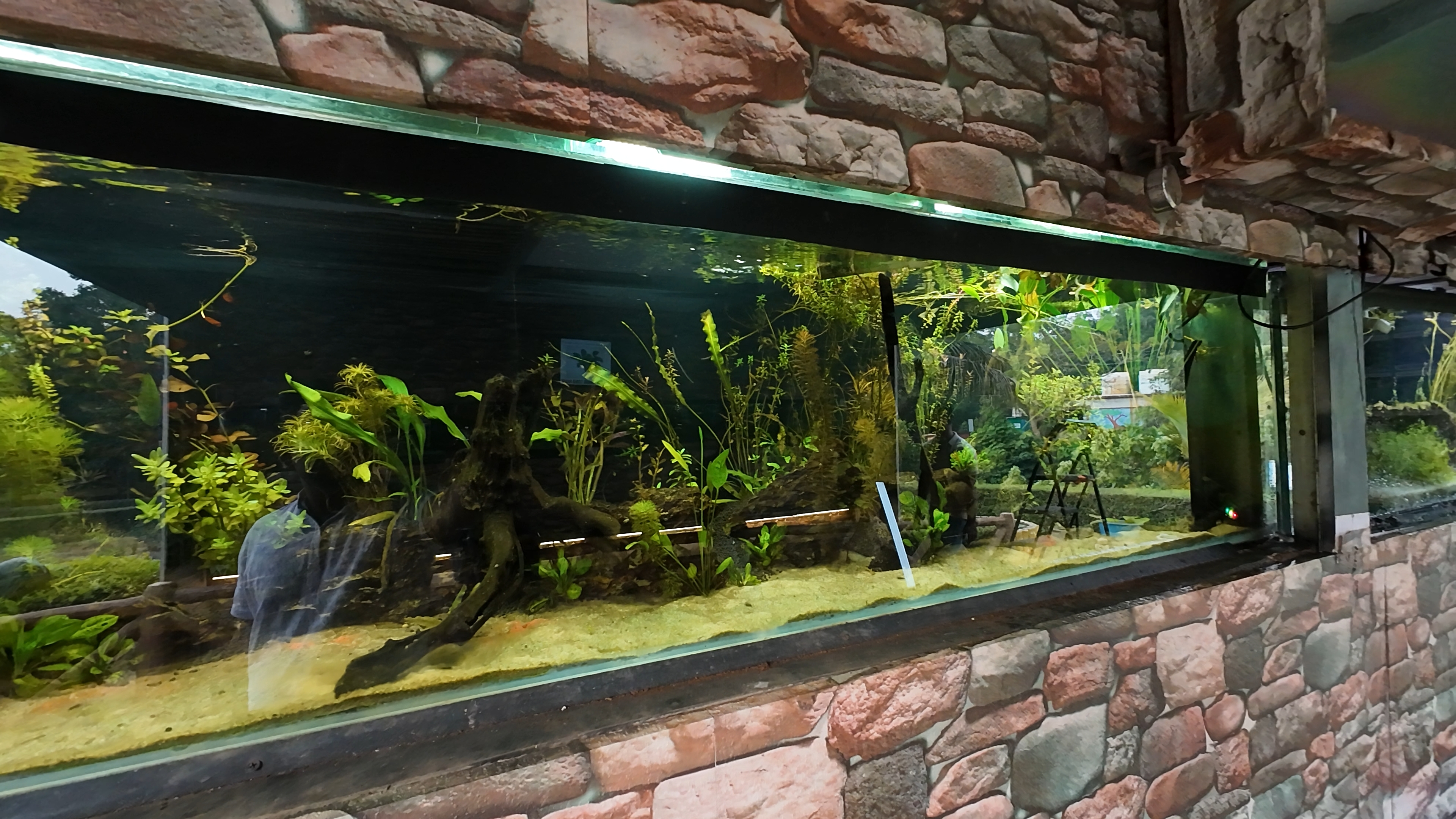
Next came the Mughal Garden — home to a Hydrophytes Information Center focused on water plants, mushroom-shaped seating dotted around, a wide spread of flowering plants, and a coconut tree with actual birds' nests hanging from it. In one corner, someone had trimmed the shrubs to spell out "STATE BOTANICAL GARDEN" in plant lettering — a small, slightly cheesy detail that we still smiled at.
Roses, wings, and the sky above Kanjia Lake
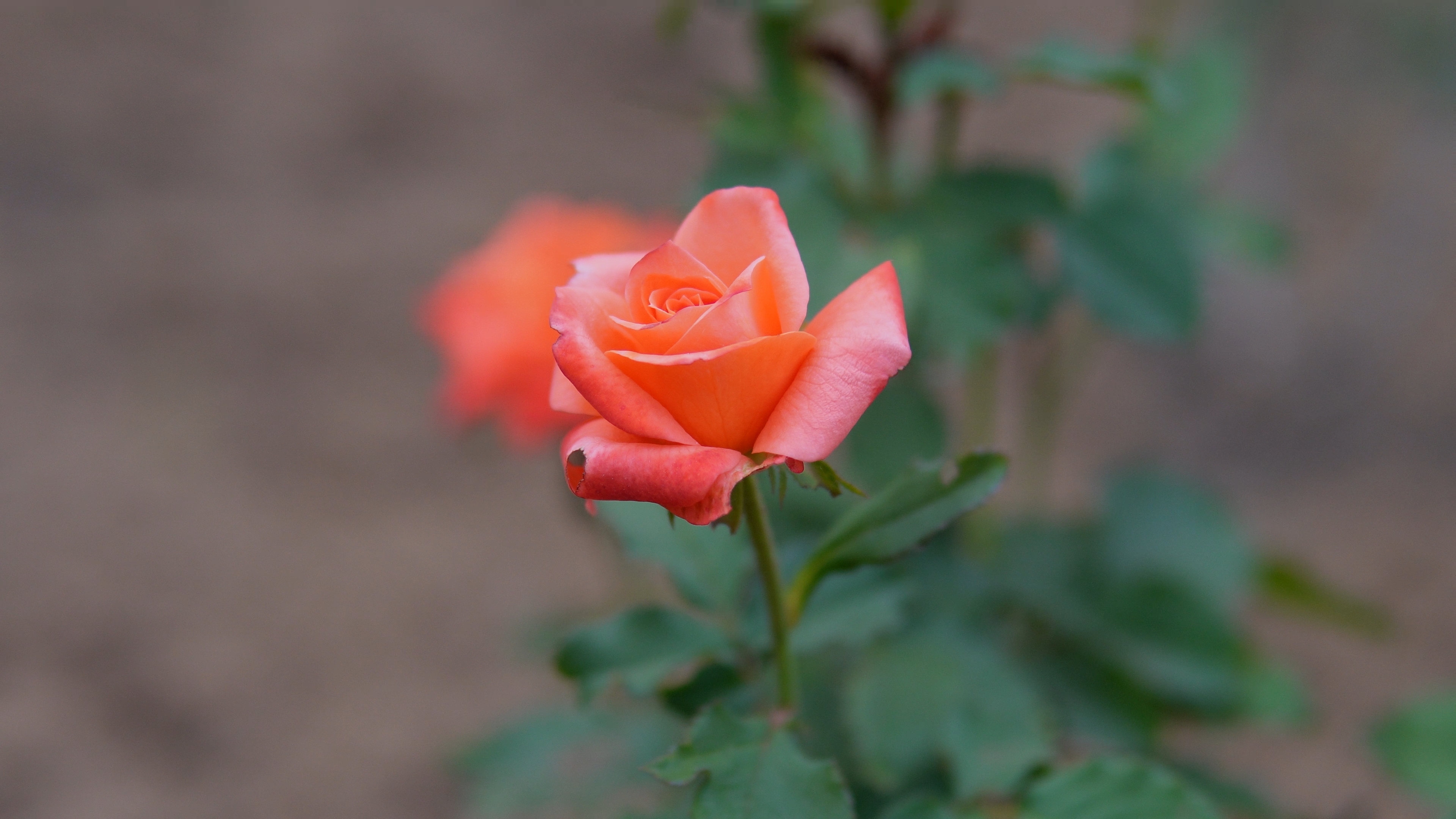
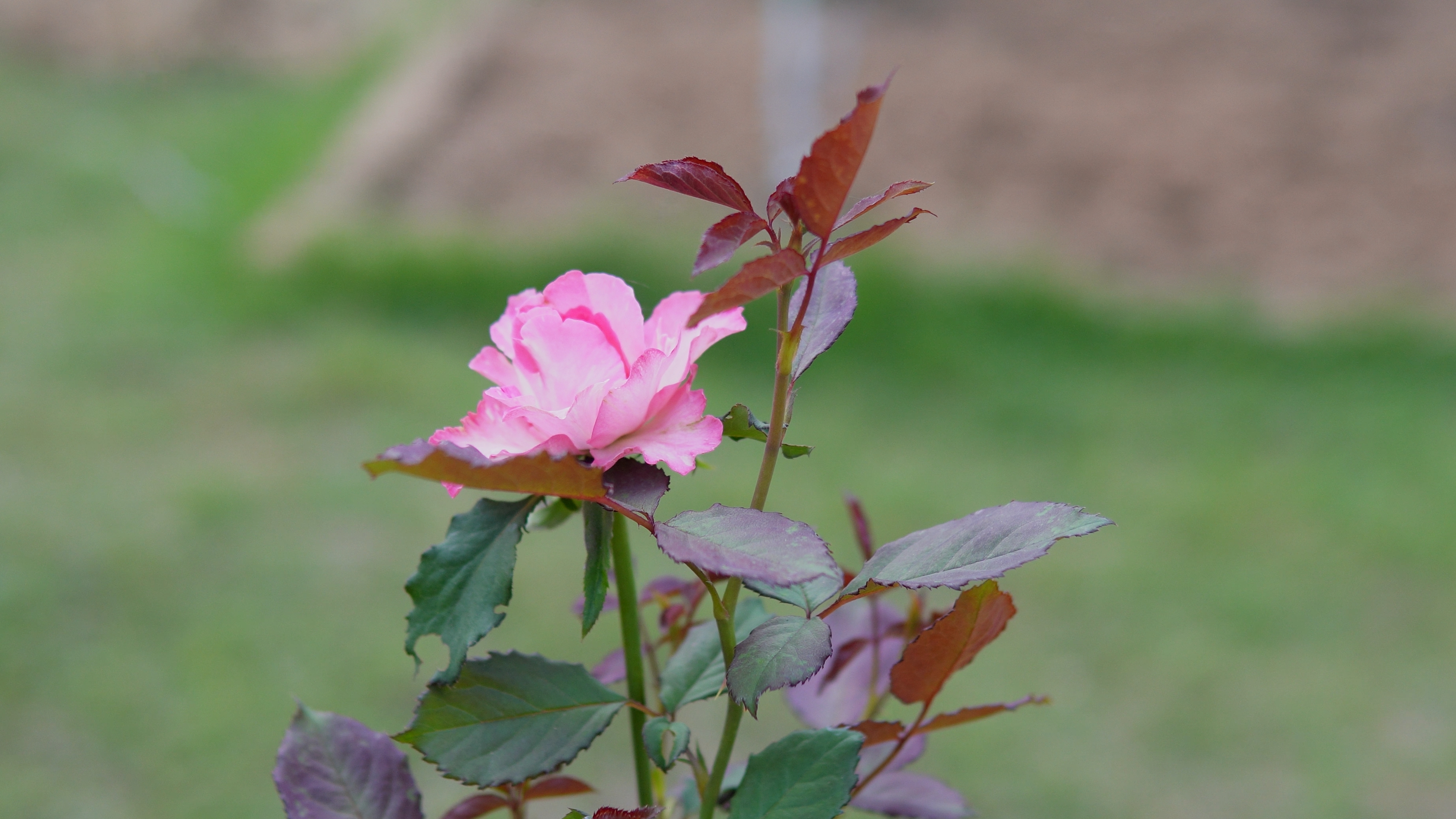
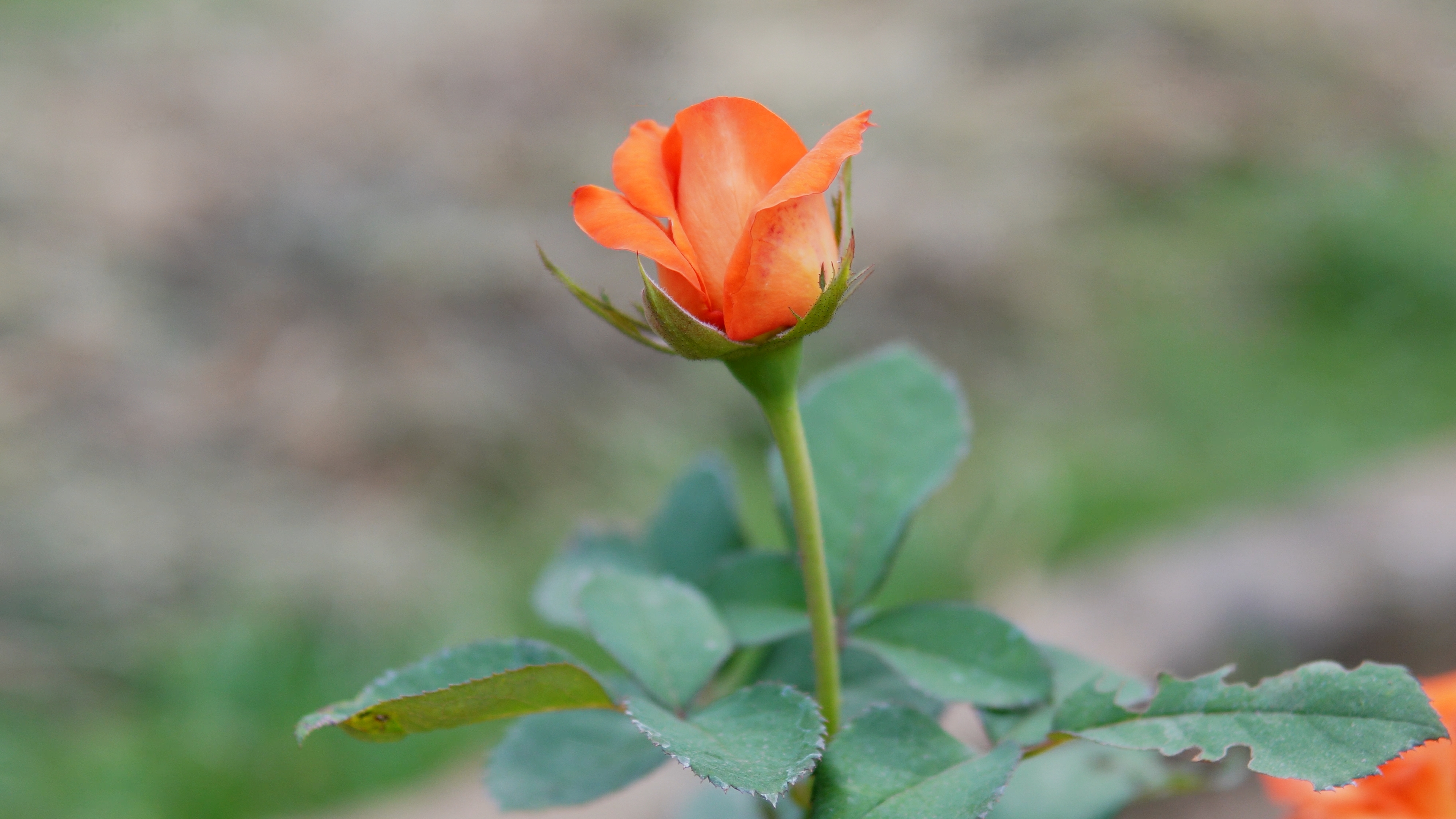
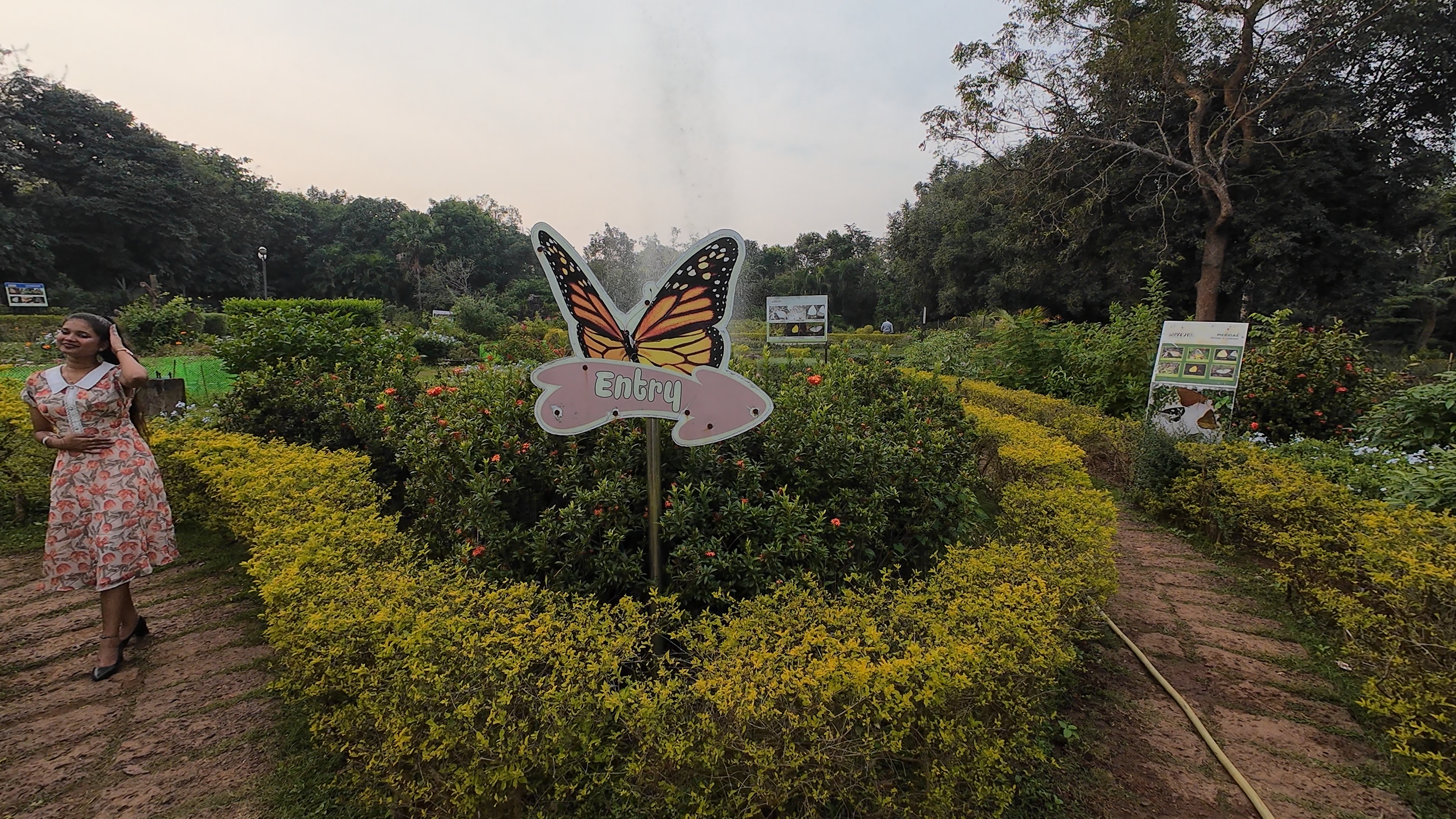
The Rose Garden was next — 1.5 acres holding 55 varieties of roses, more shades and forms than we expected to see in one place. From there we walked into the Butterfly Garden, which turned out to be the most crowded section we'd seen yet, thanks to its fountains and artificial waterfalls and genuinely well-laid paths. Ironically, the butterflies themselves were hard to spot — we counted more people than wings. The Butterfly Interpretation Centre was closed, but the information boards scattered around were worth reading anyway. Right after came the Palm Garden, a simple but satisfying mix of palm varieties, from knee-high to towering.
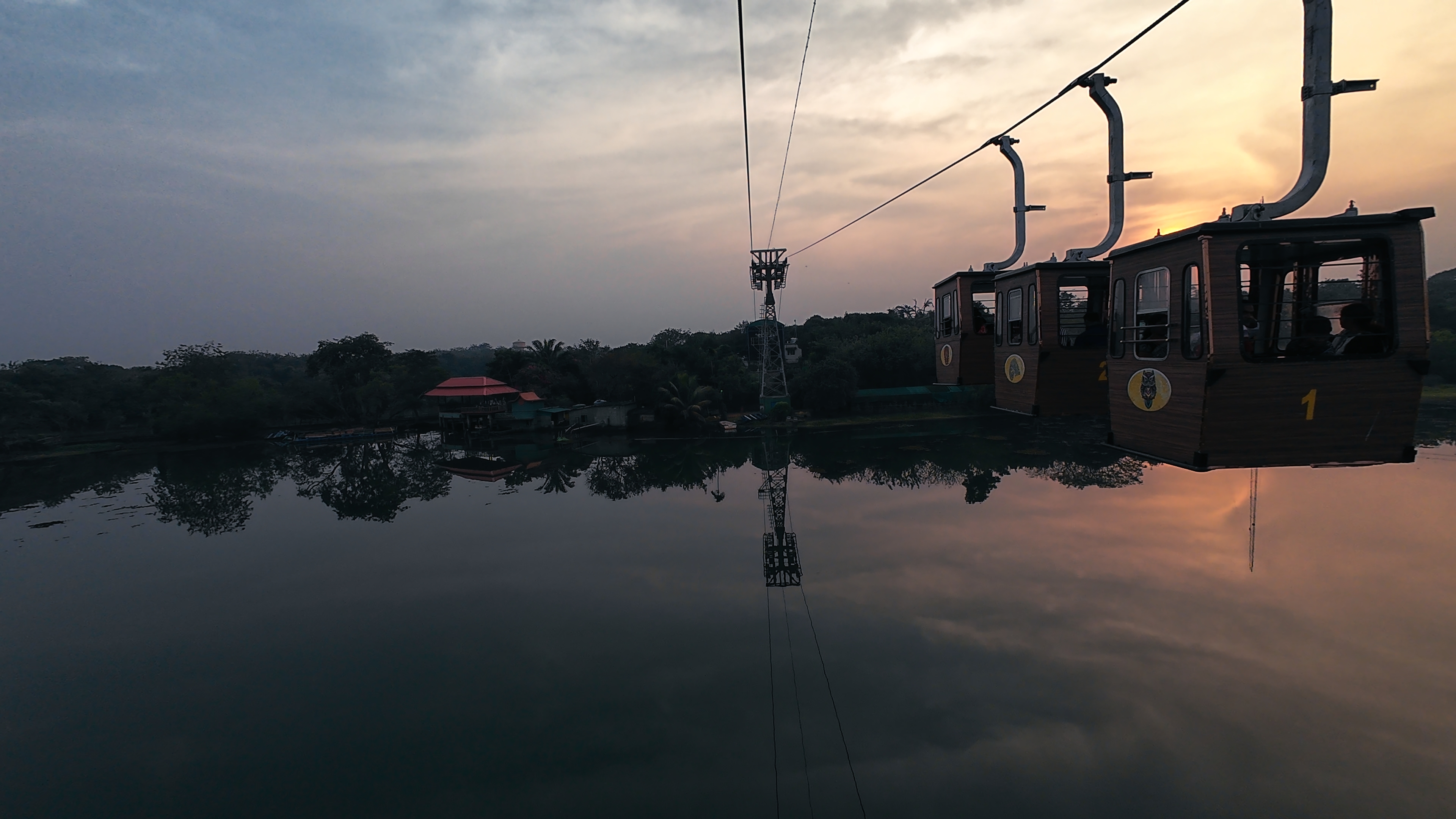
Then came the part most people come specifically for — the ropeway. It's ₹120 per person, free for children under three and for differently-abled visitors, and it connects Nandankanan Zoo to the Botanical Garden via a 618-metre monocable pulsated ropeway, with 12 cabins carrying up to six people each. From up there, Kanjia Lake and the green spread of the garden below look like a different place entirely — worth the ticket on its own.
Running out of daylight
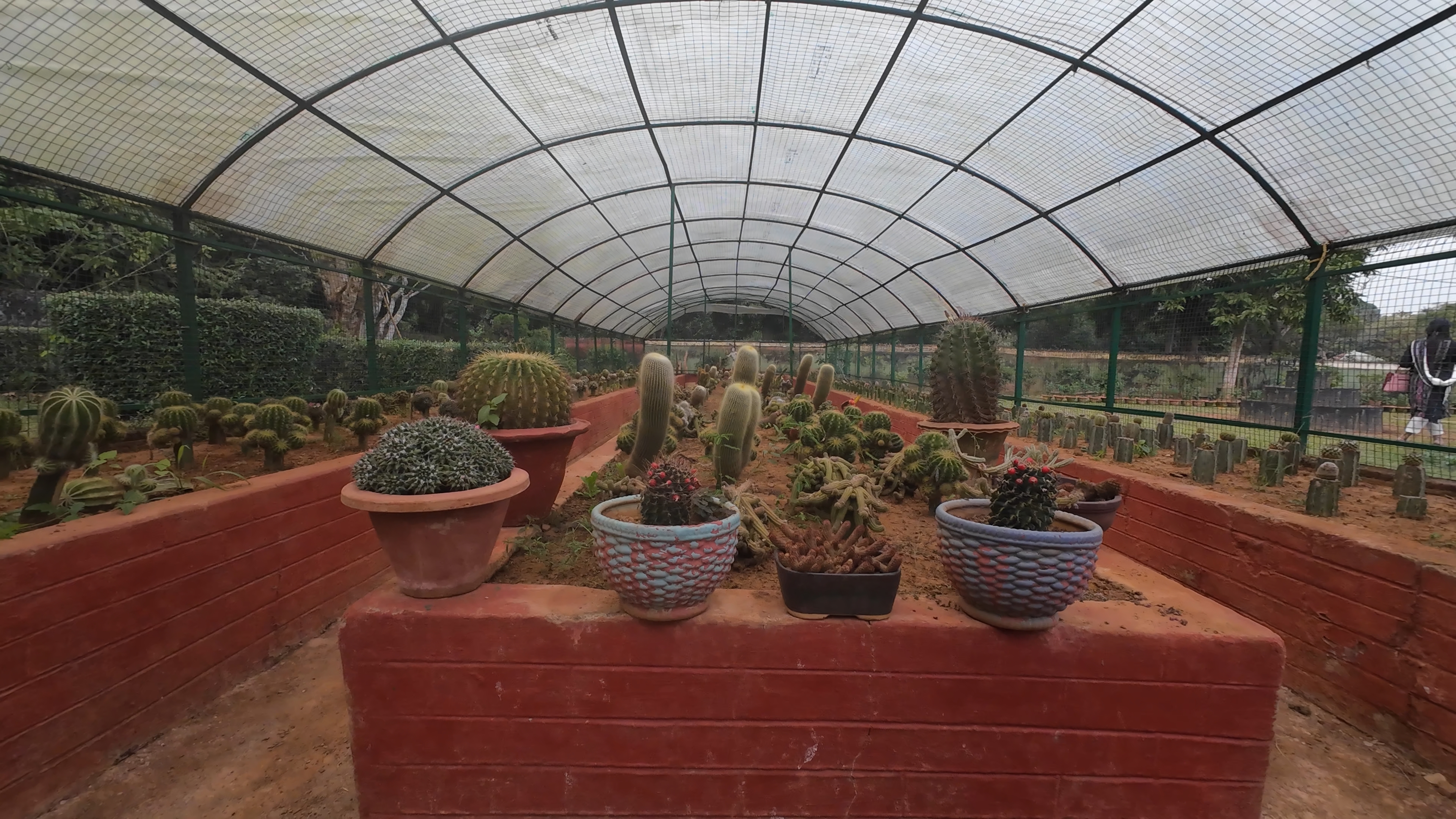
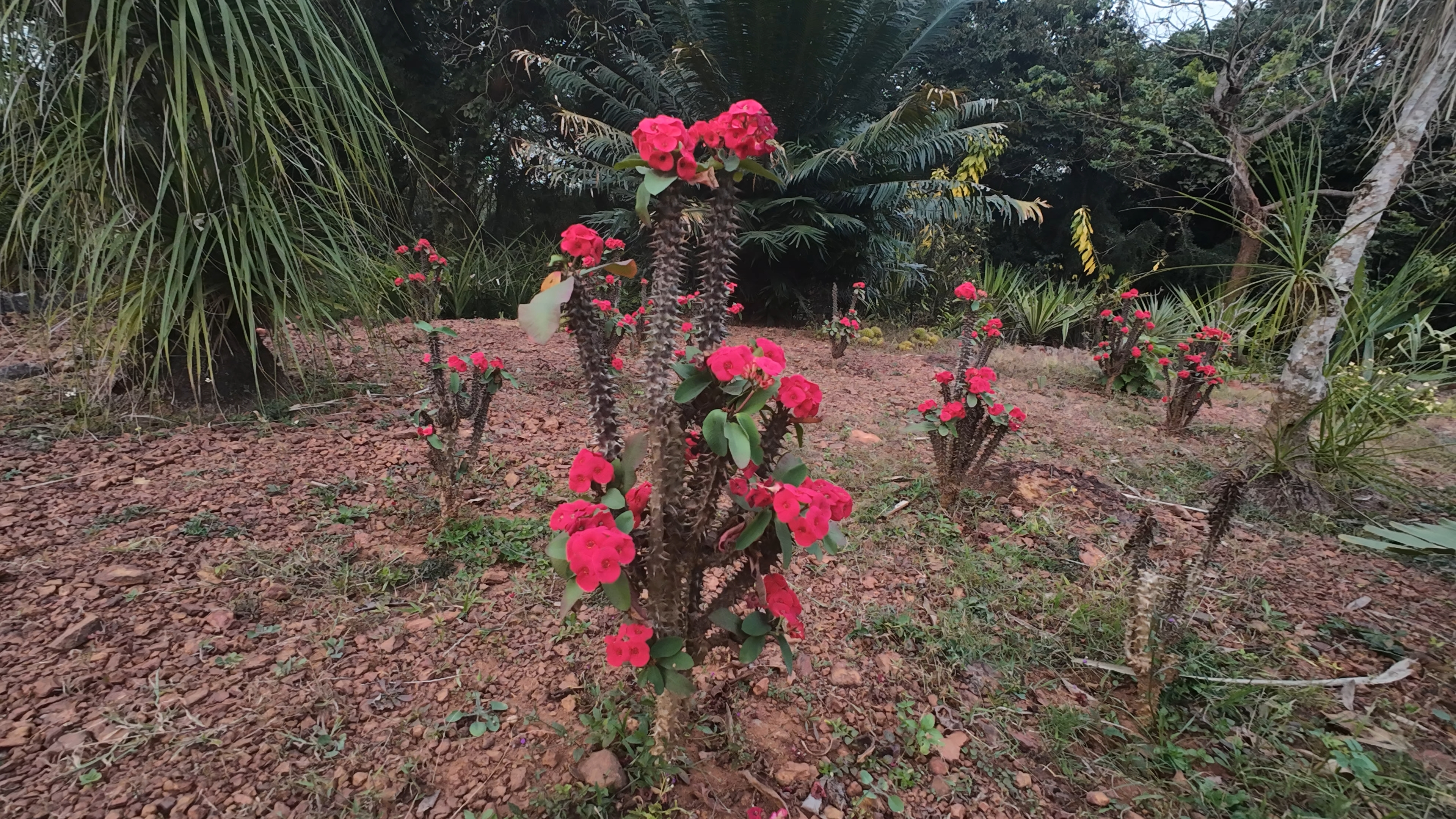
Behind the ropeway station is the Hibiscus Garden, full of hibiscus in more colours than we expected — but by this point the clock was working against us, since the garden closes at 5 PM. We hurried toward the Glass House, built to house cactus plants, only to find it already closed for the day. The Dry Garden around it, full of low-water, cactus-family plants, was at least still open to walk through.
We never made it to the Bamboo Setum. Staff we spoke to said it's genuinely a must-visit section, but daylight had run out on us by then. If you've been and seen it, we'd love to know what we missed — tell us in the comments.
Know before you go
It's the largest botanical garden in the state, and it shows — in scale, in ambition, in how many small worlds it tries to hold in one place. It could use a little more upkeep here and there, but Rasmita was right at the gate: parts of this place really do feel like poetry, you just have to walk far enough to find them.