
Ekamra Kanan
— The Botanical Garden of Bhubaneswar
Nayapalli · Bhubaneswar · Odisha
Bhubaneswar never really stops. The traffic, the construction, the noise of a city constantly reinventing itself — it is relentless, and wonderful, and exhausting all at once. But tucked into the Nayapalli neighbourhood, behind a gate that most people drive past without looking, is 500 acres of something else entirely. Tall trees, winding paths, the sound of birds, the smell of wet earth and flower — Ekamra Kanan, the botanical garden that goes by many names but is best understood simply as the city's green lung, its exhale, the place where Bhubaneswar remembers to breathe.
Officially called the Regional Plant Resource Centre (RPRC) Botanic Garden, Ekamra Kanan was established in 1985 as a research institution dedicated to plant biodiversity, rare and endangered species, and horticultural conservation. It was opened to the public on 30th November 2004 by then Chief Minister Shri Naveen Patnaik — and in the years since, it has become one of the most quietly beloved green spaces in eastern India. Families come on Sunday mornings. Joggers arrive before dawn. Photographers stay until the evening light turns gold.
At ₹40 an entry — and just ₹10 for early morning joggers — it is one of the most generous deals in the city. And inside, a world unfolds that most visitors don't fully expect: rose gardens, sacred tree groves, desert cacti in a pyramidal glasshouse, a lake that draws migratory birds in winter, and pathways that go on long enough to make you feel, genuinely, like you have left the city behind.
What Makes It Special
= The Sacred Mango Grove
Bhubaneswar's ancient name is Ekamra Kshetra — the Land of the Mango Grove. Legend holds that amidst a forest of mango trees stood a single great tree, and beneath its shade Lord Shiva entered into deep meditation. That sacred grove gave its name to the city, and when a botanical garden was built to preserve and celebrate plant life in modern Bhubaneswar, there was only one name it could carry. Ekamra Kanan is the ancient grove reimagined for the present.
Your Ekamra Kanan Visit, Step by Step
First Steps Inside — Where the City Fades
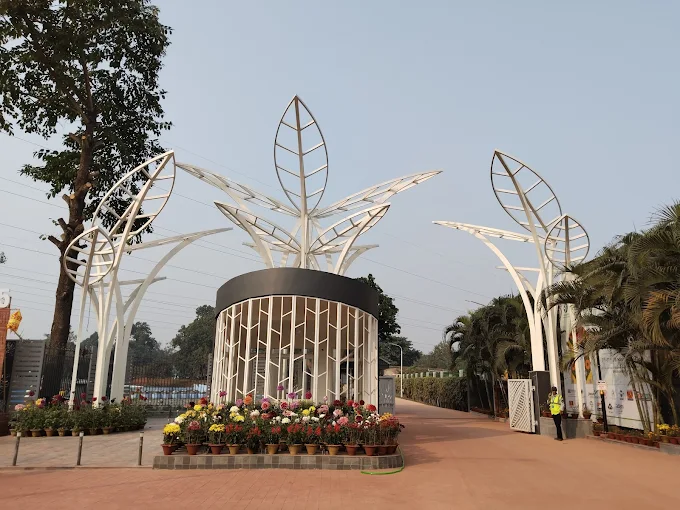
The first thing you notice when you step through the gate of Ekamra Kanan is the temperature. It drops, slightly but perceptibly. The canopy closes over you, the sound of traffic recedes, and the air fills with something green and cool and unhurried. This is what 500 acres of mature botanical garden does to a space — it creates its own climate, its own pace, its own logic.
Just inside, a fork in the path presents the choice every visitor faces: turn right for the rose garden, the children's park, and the sacred grove of Jagannath Vatika; or go straight for the cactus house, the palm avenue, and the lake. Most experienced visitors do both — the garden rewards a slow circuit, and the rewards multiply the longer you stay.
Photography rules: Personal camera and mobile phone photography is permitted. Tripods and drones are strictly not allowed inside the park — plan your shots accordingly and avoid any trouble at the gate.
Monthly pass: If you live nearby, a monthly pass at just ₹200 gives you unlimited daily access — one of the best deals in Bhubaneswar for regular exercise and greenery.
Rose Garden & Jagannath Vatika — Colour and Meaning
The Rose Garden announces itself with colour before you're even fully inside it. More than 1,000 varieties of roses — in shades of pink, red, white, cream, and yellow — fill a large section of the park's right wing. In the cooler months, when the blooms are at their fullest, this garden is a photographer's dream: compact compositions, saturated colour, and the kind of light that filters through the surrounding trees in the morning and turns everything warm.
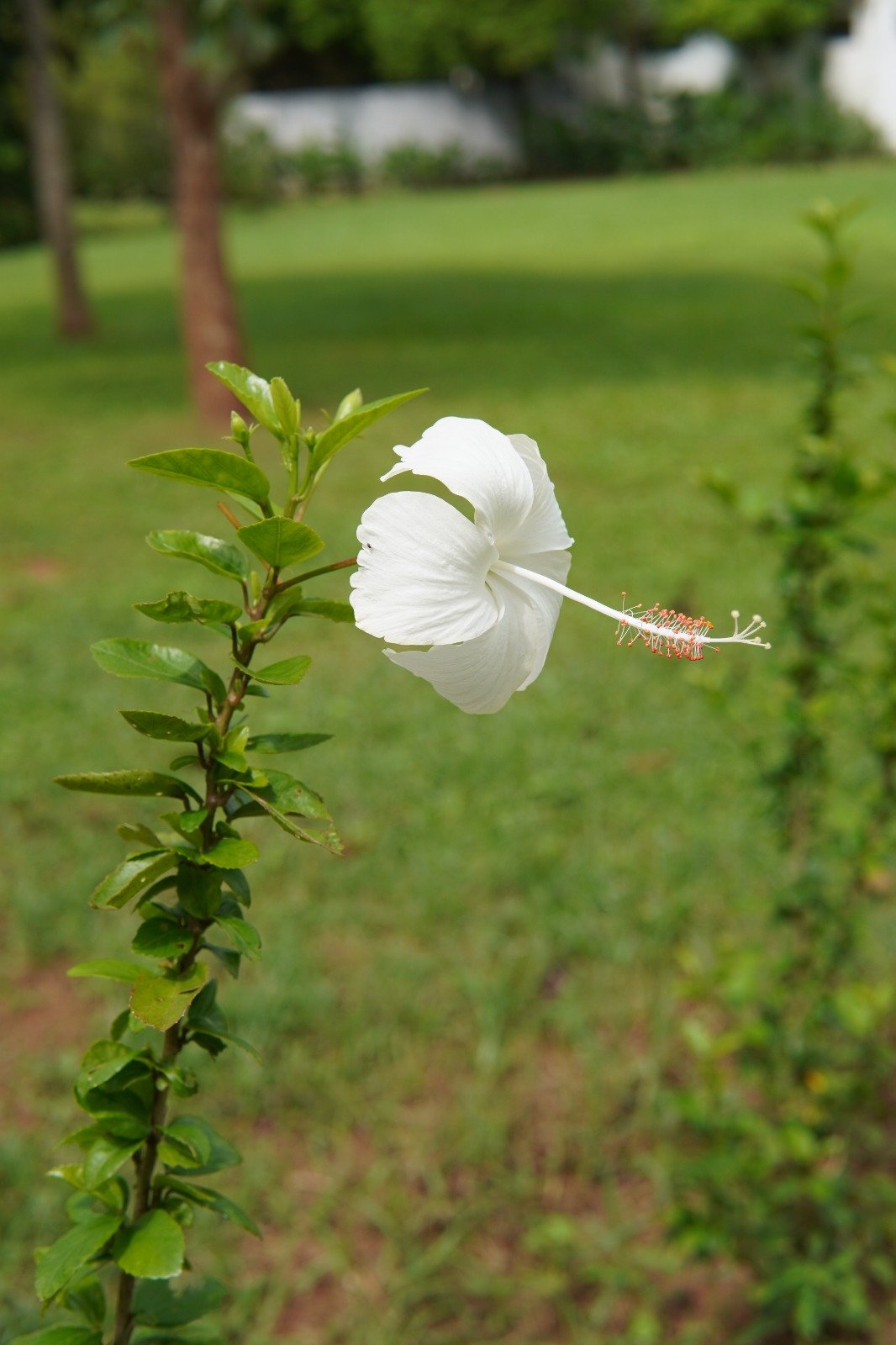
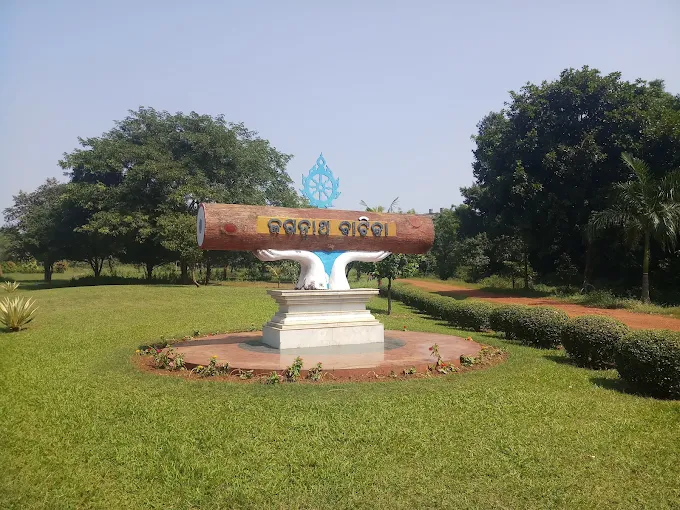
Just beyond the rose garden, the path leads into Jagannath Vatika — perhaps the most thoughtful corner of the entire park. This sacred grove brings together trees of spiritual, medicinal, and cultural significance to Odisha and to broader Indian tradition. Walking through it is equal parts botany lesson and quiet meditation. Every tree has a board: its Odia name, its Sanskrit name, its scientific classification, and its significance.
Among the trees we encountered: Tulasi (Holy Basil), Ashoka (Saraca asoca — sacred to Lord Rama and a symbol of grief and renewal), Nageswar (Messua ferrea — the Indian rose chestnut, used in Ayurvedic medicine), Chandan (Sandalwood), Anla (Amla, or Indian gooseberry — one of Ayurveda's most revered fruits), Harida (Haritaki), Bahada (Bibhitaki), Teja Patra (Indian Cinnamon), and many others — a living pharmacy assembled with quiet reverence.
We also noticed propagation work underway in parts of the garden — cuttings and grafting in progress — and caught a glimpse of a strikingly beautiful blue lily in bloom, the kind of quiet discovery that rewards slow walking and attentive eyes.
The Cactus House — A Desert Inside the Tropics
The Cactus House is one of the newest additions to Ekamra Kanan — opened just three months before our visit — and it is genuinely unlike anything else in the park. A pyramidal glasshouse rising from the greenery, it is home to more than 1,000 species of cacti and succulents gathered from arid zones around the world. Step inside and the temperature shifts again — drier now, more textured, the air faintly dusty in the way of desert places.
The collection is extraordinary in its range: tall columnar cacti rising to the ceiling, barrel cacti in rings along the ground, delicate succulents with geometric precision, and several plants in mid-bloom — a reminder that even the most seemingly austere desert plant is, when conditions are right, capable of extraordinary beauty. The natural engineering of cacti — storing water in their thick, waxy stems to survive months without rain — makes them one of the most elegant examples of adaptation in the plant world.
Beyond the Cactus House, the Palmetum offers a completely different kind of beauty. A wide avenue lined with many varieties of palm — Royal Palms, Fishtail Palms, Traveller's Palms, and more — the Palmetum is one of the most photogenic straight-line walks in the garden, the tall trunks creating a natural colonnade that leads you toward the lake.
The Lake, the Gym & What's Still Waiting
At the garden's heart lies its 45-acre lake — a wide, still expanse of water fringed with trees and, in winter, animated by flocks of migratory birds that arrive from as far away as Central Asia and Siberia. In the warmer months, the lake is quieter, but its surface still reflects the sky in that particular way that open water always does — making the space feel larger than it is, more open, more untethered from the city.
The boating area was closed during our visit, the paddle boats pulled up and clearly in need of attention. It is a part of the park that deserves restoration — a lake this large, in a garden this beautiful, should have boats on it. The management will hopefully get there. Similarly, the Orchidarium is currently undergoing renovation and was not accessible to visitors. Orchids are, as many visitors will tell you, among the most anticipated attractions in Ekamra Kanan — and the wait for the renovation's completion is a real one.
What is open and functioning is the Open Gym beside the lake — a well-placed set of outdoor exercise equipment that lets morning visitors combine a jog through the park with a proper workout, all for the cost of a ₹200 monthly pass. It is, as gym memberships go, an extraordinary deal — and the setting makes it unlike any gym in the city.
Birdwatching tip: The lake attracts migratory species between November and February. Come early morning with binoculars if you can — the birds are most active in the first two hours after sunrise.
Koraput Coffee, the Nursery & the Perfect Photo Spot
On the return leg of the circuit, the Koraput Coffee Stall presents itself as a welcome stop — a nod to Odisha's only significant coffee-growing region and a reminder that the state has more to offer than most people realise. We ordered black coffee: the quantity was reasonable, the price a touch higher than we expected, and the taste — honestly — was average rather than memorable. We're telling you this so your expectations are calibrated. The coffee stall is a nice idea, and the Koraput region's coffee deserves better representation — perhaps on a future visit, the quality will have improved.

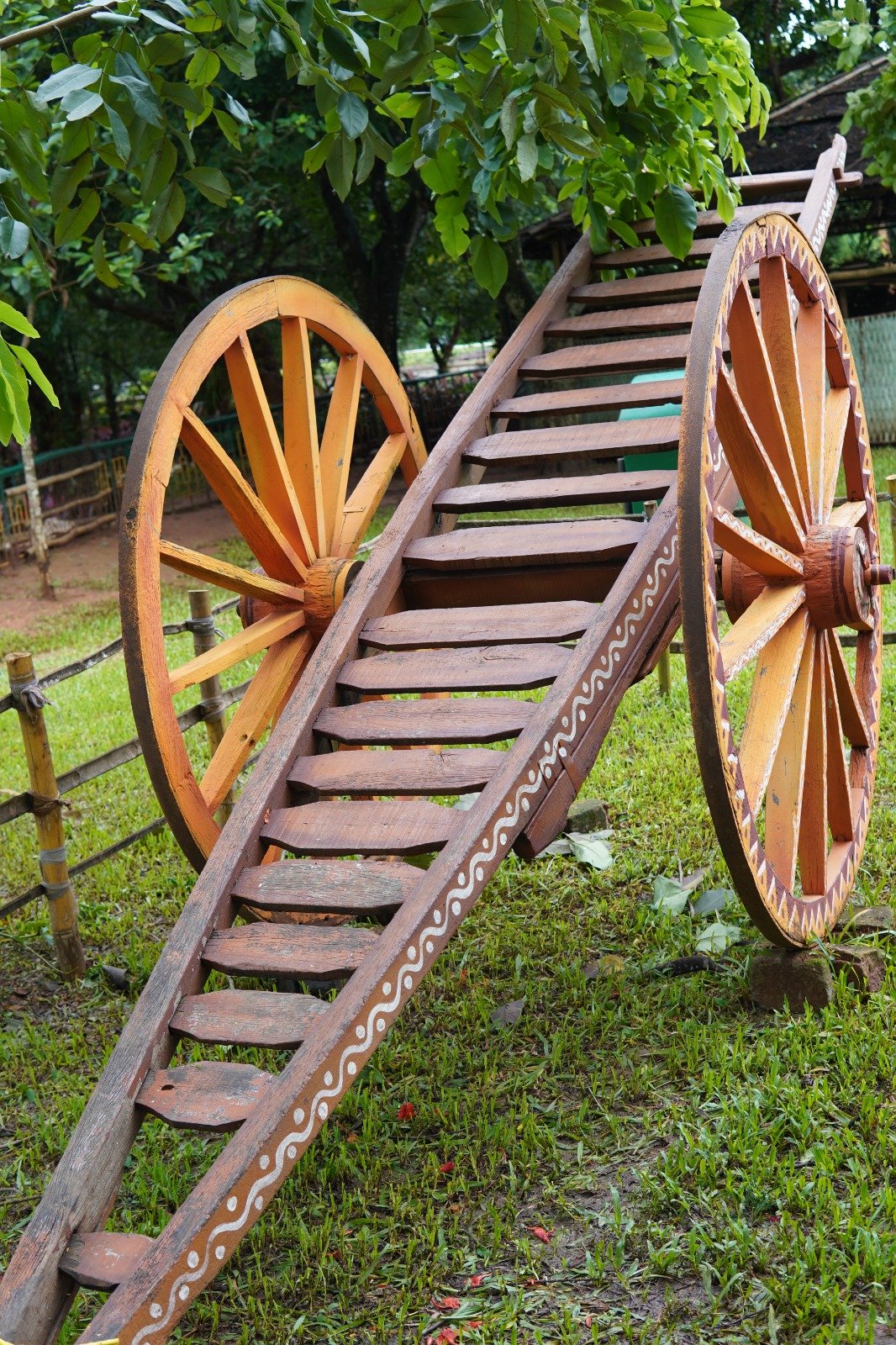
The Nursery, near the exit, is where most of the garden's plants are propagated before being placed around the park. Rows of seedlings, cuttings in trays, plants at every stage of growth — it is a working space, not a showpiece, and all the more interesting for it. But the real find at the nursery is what lies behind it: a quietly photogenic corner with dappled light, layered greenery, and exactly the kind of natural framing that makes for the most effortless photographs. If you visit Ekamra Kanan, do not leave without walking to the back of the nursery. We came close to missing it entirely.
What the Garden Gets Right — and What Needs Attention
Ekamra Kanan is one of the finest botanical gardens in eastern India, and it earns that status. But a visit here also surfaces a few honest realities that deserve mention — not to discourage you, but because you deserve to know what you're walking into.
At the entry gate, a board lists the park's rules clearly: no smoking, no alcohol, no picnicking, no plastic, no littering, no cycling, no pets. These are good rules, and the park's staff — particularly the security team — generally enforce them with care. Couples in particular will appreciate that the park is kept respectful and safe; the security presence is attentive without being intrusive.
What was harder to accept was finding plastic bottles floating in the lotus pond — the very pond that sits behind the rules board. The rules exist. Enforcement, in that corner at least, had not kept pace. Similarly, stray dogs roam parts of the park despite the "no pets" rule. These are not reasons to avoid Ekamra Kanan. They are reasons to carry out what you carry in — and reasons for the management to look more carefully at the pockets of the park that are slipping.
Currently closed / under renovation: Boating area (restoration needed), Orchidarium (renovation in progress), Cactus Succulent Garden (closed during our visit). Check for updates before planning specifically around these attractions.
Things To Do at Ekamra Kanan
See the Full Ekamra Kanan Journey
Walk with us through the rose garden, the sacred grove, the cactus house, and the quiet back paths of Bhubaneswar's most beautiful botanical garden.
Best Time to Visit
What You'll Find Here
How to Reach Ekamra Kanan
Why Ekamra Kanan Is Worth Your Morning
Bhubaneswar is a city of temples and bureaucracy, of rapid construction and historical depth, of traffic roundabouts and ancient tank ponds. It is not, on most mornings, a city that makes it easy to breathe. Ekamra Kanan is the correction to that. It is the place the city put aside for the part of itself that needed to stay green, to stay slow, to stay connected to the older idea of what this land once was — a sacred grove, a mango forest, a place where a god came to sit in silence.
At ₹40, it is one of the most honest bargains in Odisha's travel landscape. The rose garden alone is worth it. The cactus house, the sacred trees of Jagannath Vatika, the lake, the early morning mist on the palm avenue — any one of these would be worth ₹40. Together, they make a morning here feel like a genuine escape.
Bring your camera. Leave the tripod at home. Come early. Walk slowly. And do not, under any circumstances, skip the nursery photo spot at the back.
May you always find a green corner — somewhere quiet, somewhere unhurried — to remember what the ground beneath the city once looked like, and what it still, quietly, holds.
Thank you for exploring with us — until the next destination.