
Where the City
Exhales.
Bhubaneswar · Odisha · Urban Forest Retreat
There are mornings in Bhubaneswar when the city feels too loud, too fast, too concrete. It was on one such morning — the kind where you reach for your phone before you've even opened your eyes — that we decided to step away. Not out of the city. Just away from the noise of it. That's when Anandabana found us.
Tucked inside the urban sprawl of Bhubaneswar, just off the Janpath corridor, lies 89 acres of a world that feels entirely unlike anything outside its gates. A few years ago, this land was little more than a dry, barren stretch — forgotten, baking in the Odishan summer. Today it is a magical manmade forest: 40+ species of trees, migratory birds, butterflies, water bodies, and a stillness so complete it almost feels borrowed from somewhere far, far away.

What Makes It Special
Your Visit, Step by Step
Walking Into Silence
The first thing you notice is not the green — it is the quiet. No traffic, no horns, no city hum. Just the soft crunch of the path beneath your feet, the whisper of leaves in a morning breeze, and somewhere above you, a bird announcing the day to no one in particular.
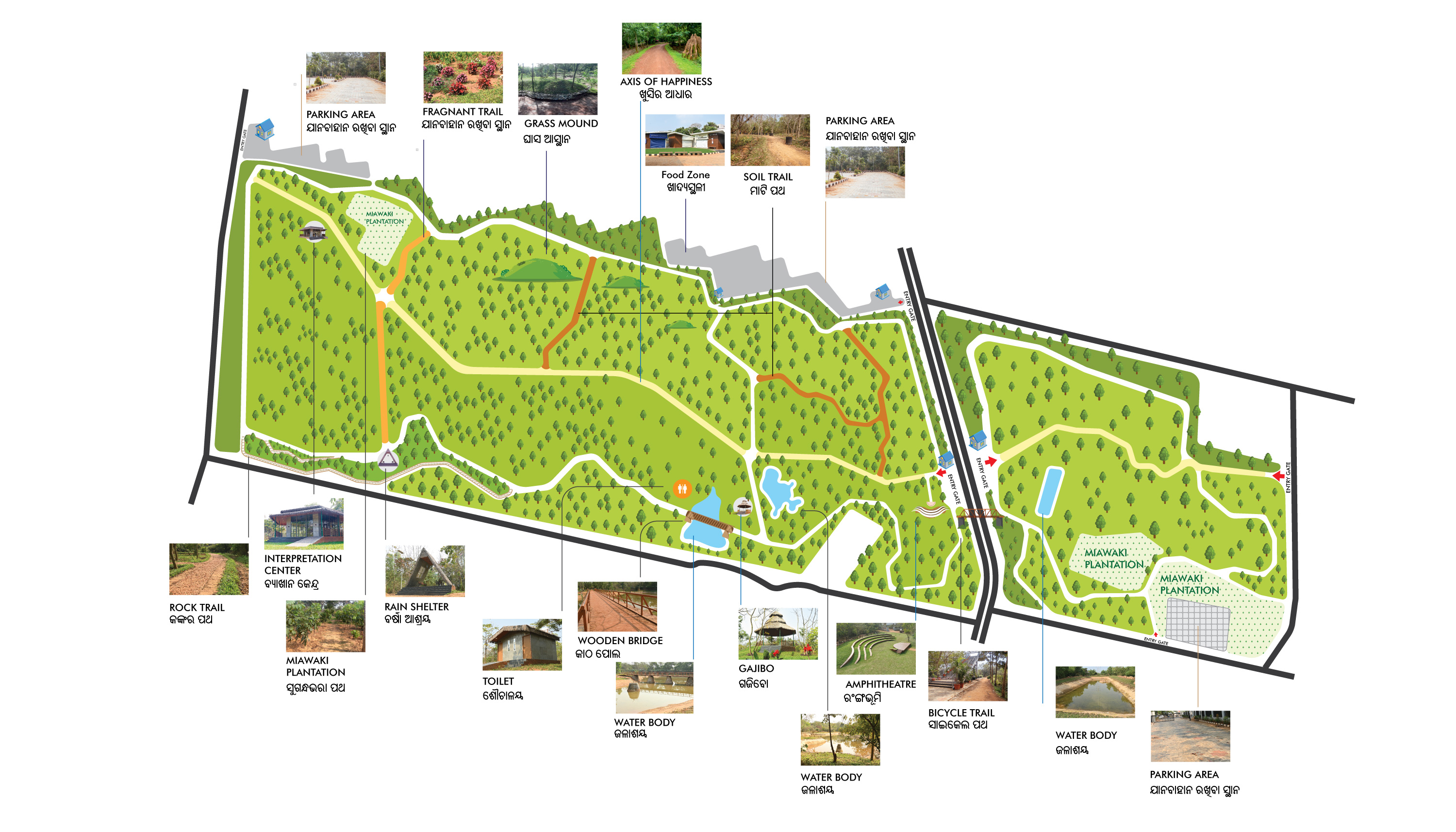
Anandabana's 4.7 kilometres of trails are designed for every kind of walker. There are smooth, wide paths for cycling and jogging, narrower routes for those who want to feel more enclosed by the trees, and then the barefoot rock trail — a strip of rounded pebbles and stone that presses into your soles in just the right way, improving blood circulation and grounding you, quite literally, in the present moment.

The trails are well-maintained and clearly marked, but first-timers should grab the map at the entrance gate — Anandabana is larger and more layered than a first glance suggests. Routes branch unexpectedly. And getting happily turned around in 89 acres of forest is, honestly, one of the better things that can happen to you on a Tuesday morning.
The Bridge Above the World
Deep inside Anandabana, the trail opens to a water body that stops you in your tracks. Ducks drift lazily across the surface. The trees around the lake lean inward, their reflections shimmering in the still water below. And at the centre of it all, a wooden bridge crosses the lake — unhurried, unpretentious, and at sunset, absolutely mesmerising.
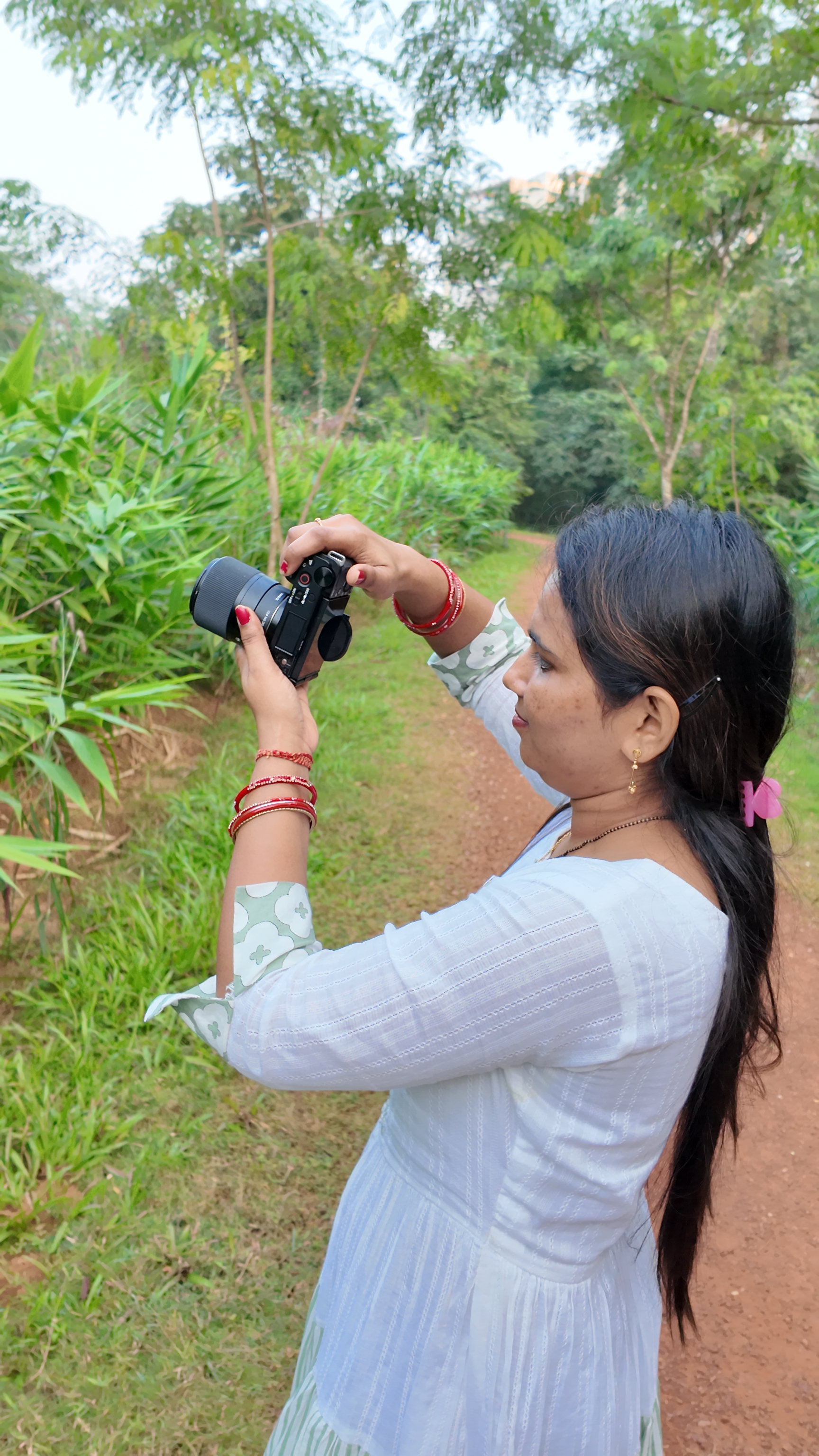
We stood on that bridge for longer than we had planned. There was something about the light on the water, the ducks paddling past, the way the whole scene felt completely disconnected from the city that was — unbelievably — just a few hundred metres away. Someone nearby was pointing a camera at a tree. A couple was walking in slow, easy silence. No one was in a hurry.
Then there is the Forest Sky Bridge — a green, vine-covered walkway that spans an actual city road below. From the bridge, you can see the traffic moving beneath you. But up on the bridge, under a canopy of creepers and leaves, it all feels impossibly far away. It is perhaps the most striking visual argument Anandabana makes: that nature and the urban world do not have to be in conflict. They can coexist, beautifully, if we let them.
Shelters, Books, and the Art of Doing Nothing
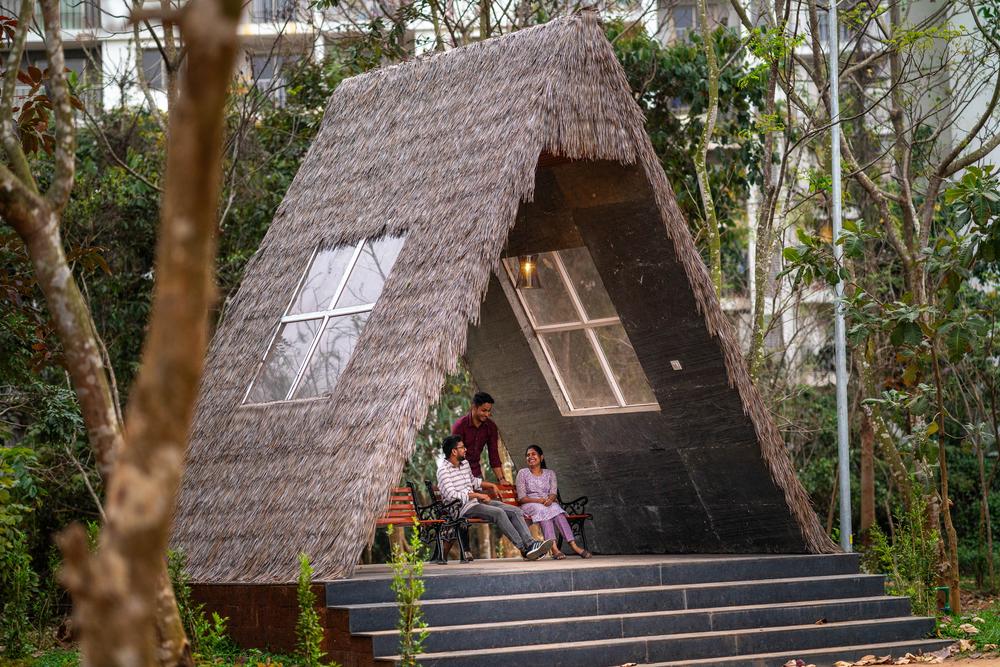
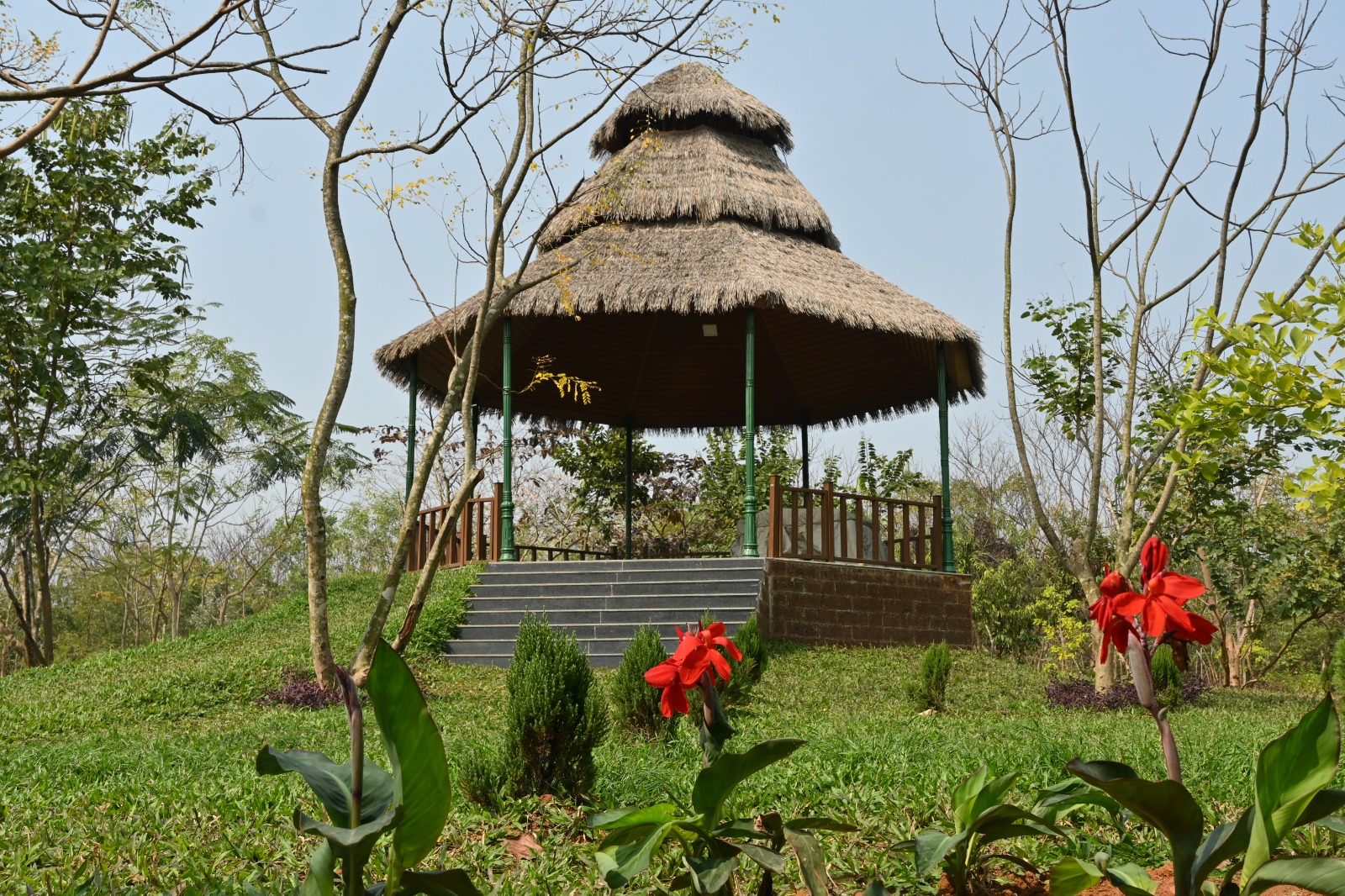
Every 500 metres along the trail, a shelter appears. Simple structures — covered seating, a roof for sudden rain, a place to sit down and not go anywhere for a while. Sit still long enough and a butterfly lands near your foot. A bird hops closer than you would expect. The whole forest seems to exhale.
But Anandabana's most unusual feature is its open-air library. Small bookshelves are positioned at intervals through the forest. You pick up a book, find a shelter, and read in the company of trees. It is one of the most quietly radical ideas we have encountered in any public space: the suggestion that nature and literature belong together, that a forest is a natural library, and that sitting still among trees with a book is not laziness but something closer to wisdom.
= The Nest of Happiness
Once a dry, barren stretch of land on the outskirts of Bhubaneswar, Anandabana was transformed through sustained community effort and urban greening initiatives into the living, breathing forest it is today — a testament to what patience, vision, and a lot of saplings can do.
The Story Behind the Forest
The Interpretation Centre was closed on the day we visited — a common enough occurrence. But even from the outside, you can sense its purpose: to document the transformation of this land, to tell the story of how 89 acres of wasteland became a habitat for birds, butterflies, and the quietly desperate residents of a growing city who needed somewhere green to breathe.

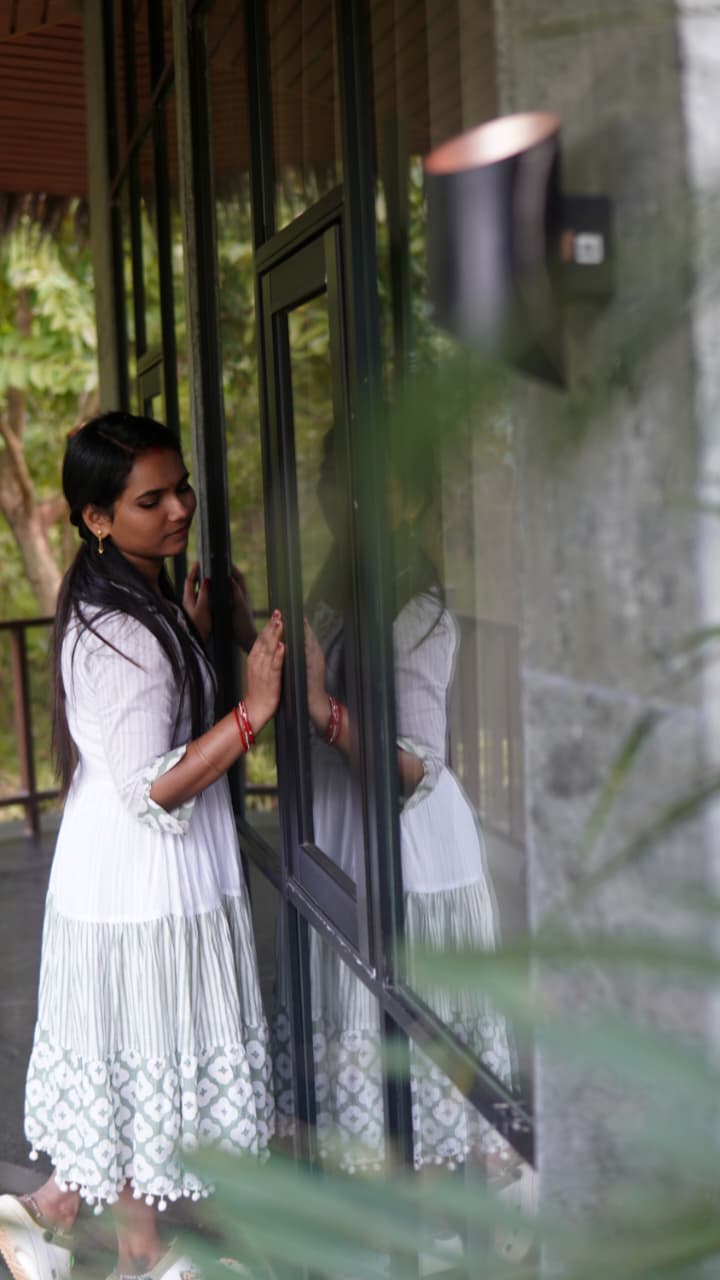
When open, the centre showcases the biodiversity of Anandabana — the 40+ tree species, the migratory birds that stop here seasonally, the insects and reptiles that have quietly made the forest their home. It is a reminder that urban forests are not just parks. They are ecosystems. And Anandabana, for all its carefully laid paths and maintained shelters, is fundamentally a wild place — a piece of the natural world that has been invited back into a city that needed it.
Tip: The Interpretation Centre may be closed on certain days or during maintenance. Call ahead if you are planning to visit specifically for the centre.
Maintenance hours: 11 AM to 3 PM — some sections may be restricted. Plan your visit for early morning for the full experience.
Things To Do at Anandabana
See Anandabana Come Alive
Words and photographs can only carry you so far. Watch our full journey through Anandabana — the trails, the bridges, the open library, and the extraordinary quiet of a forest inside a city.
Best Time to Visit
Facilities and Passes

Park Rules: No plastic · No outside food · No smoking · No alcohol. These rules are enforced — and the park's cleanliness is proof of why they matter.
Timings: Feb–Oct: 5:00 AM – 6:00 PM | Nov–Jan: 5:30 AM – 5:30 PM. Maintenance break 11 AM – 3 PM (some areas may be restricted).
Where to Eat Nearby
Just by the entrance gate, a small cluster of food options waits for those who have worked up an appetite. Millet Shakti Café serves healthy, millet-based meals — a fitting post-walk choice. The ORMAS food court offers a broader spread of local Odishan food. And the popular Koraput Coffee restaurant is perfect for a strong cup and a quiet corner after a long morning among the trees.

How to Reach Anandabana
The City That Grew a Forest
We arrived at Anandabana on one of those mornings when the city felt too loud. We left a few hours later — not because we had seen everything, but because some quiet had found its way back into us and we wanted to carry it carefully, the way you carry a glass that has just been filled.
What Anandabana has achieved is not trivial. To take 89 acres of waste ground and transform it into a forest that breathes, that shelters birds and butterflies, that gives ordinary people a place to walk barefoot and read books in the shade — this is a story about what urban planning can be when it chooses nature over concrete. A story about patience. About the extraordinary, slow power of a planted seed.
Bhubaneswar is a city that moves quickly. But inside Anandabana, time slows to the pace of a leaf falling. Go on a morning when you need to remember what quiet feels like. You will find it here, faithfully, at the end of a green path.
May Anandabana remind you that the most restorative thing in the world is still just a tree, a path, and a little quiet. Thank you for walking with us.
Share this with someone who needs a morning in the forest.